
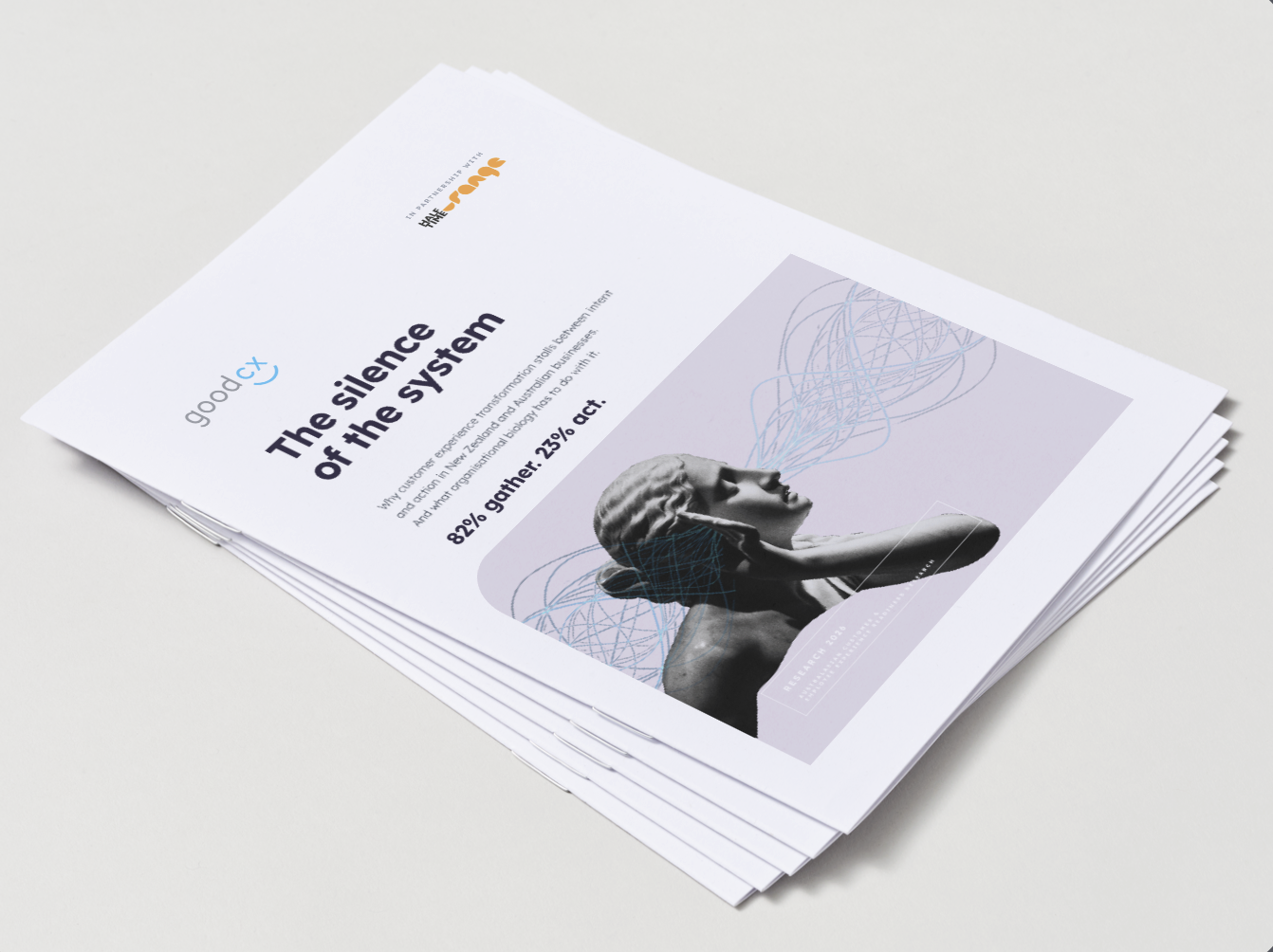
Why does transformation stall between the deciding and the doing?
That is the question this customer experience research keeps circling. Good CX runs original studies, across New Zealand and Australia, into where customer experience and employee experience efforts lose their grip.
So the work is about what a leadership team can actually do about it. Meanwhile the study is built to grow: the same questions, future waves, stronger patterns. Everything here is free to read, and all of it is citable.
The current study, 2026
The Silence of the System
Customer experience research with 123 senior leaders across Australia and New Zealand. Six findings. One uncomfortable gap.
82 per cent of those leaders gather customer feedback. But 23 per cent act on it through a clear process. This paper is about the distance between those two numbers.
So it asks where the signal dies inside organisations that look perfectly healthy on the dashboard, and why the cause is biological before it is organisational. Then it sets out what you can do about it, without waiting for a budget line.
It also introduces two things you can use straight away. The Crossing Model™ puts leadership where the evidence puts it, as the keystone between your people and your customers. The AFAR Framework™ measures the relationship rather than the activity, which means you can see whether trust is actually accumulating. Produced with our research partner Half Time Orange.
Read and download the paper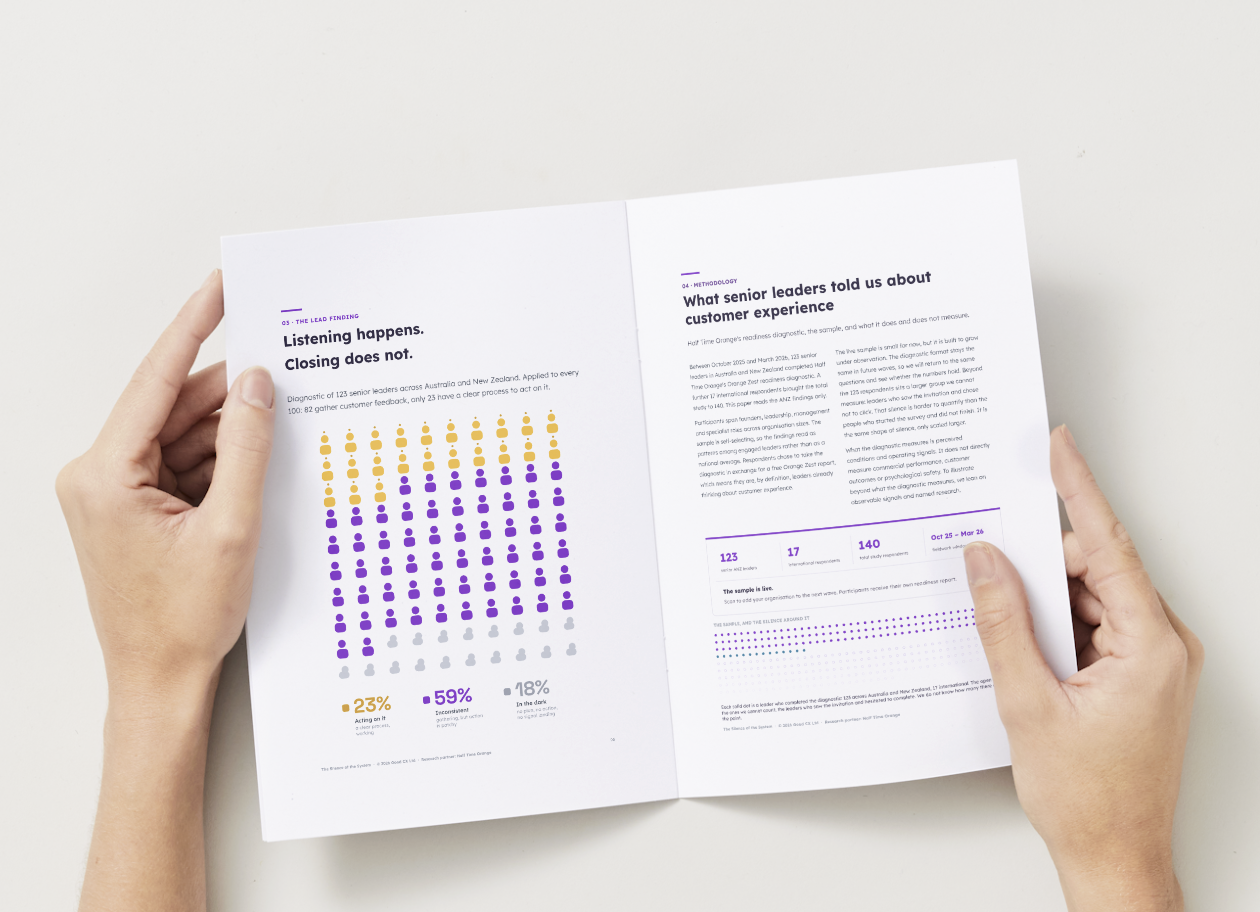
What the research produced
Built from the findings, free to use and cite.
The Crossing Model™
Leadership as the keystone between your people and your customers. Two states, three disciplines, one intervening variable. What the research found, drawn as a bridge you can point at in a meeting.
Explore The Crossing Model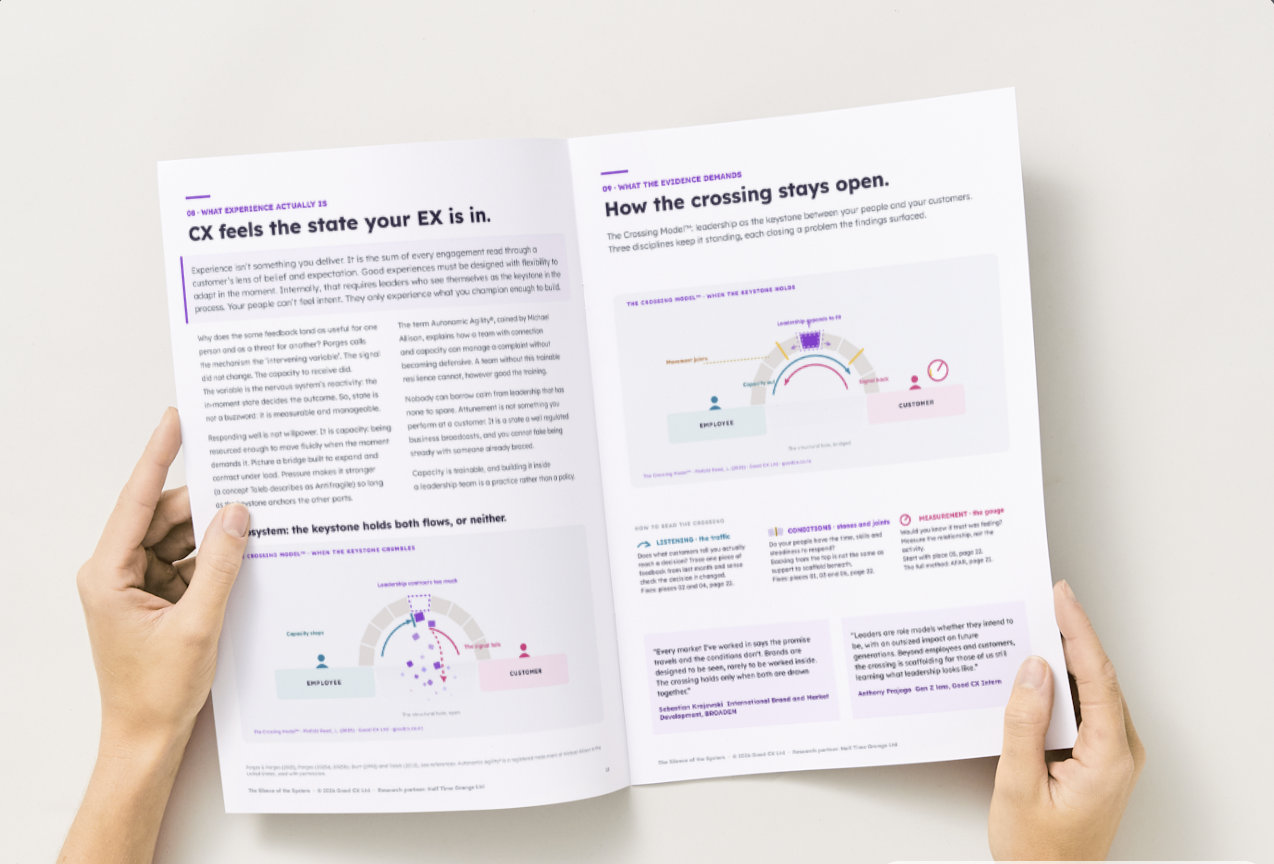
The AFAR™ framework
The measurement layer the paper argues for. Four customer signals paired with four brand conditions, so you can track whether trust is accumulating rather than counting activity.
Explore the AFAR™ framework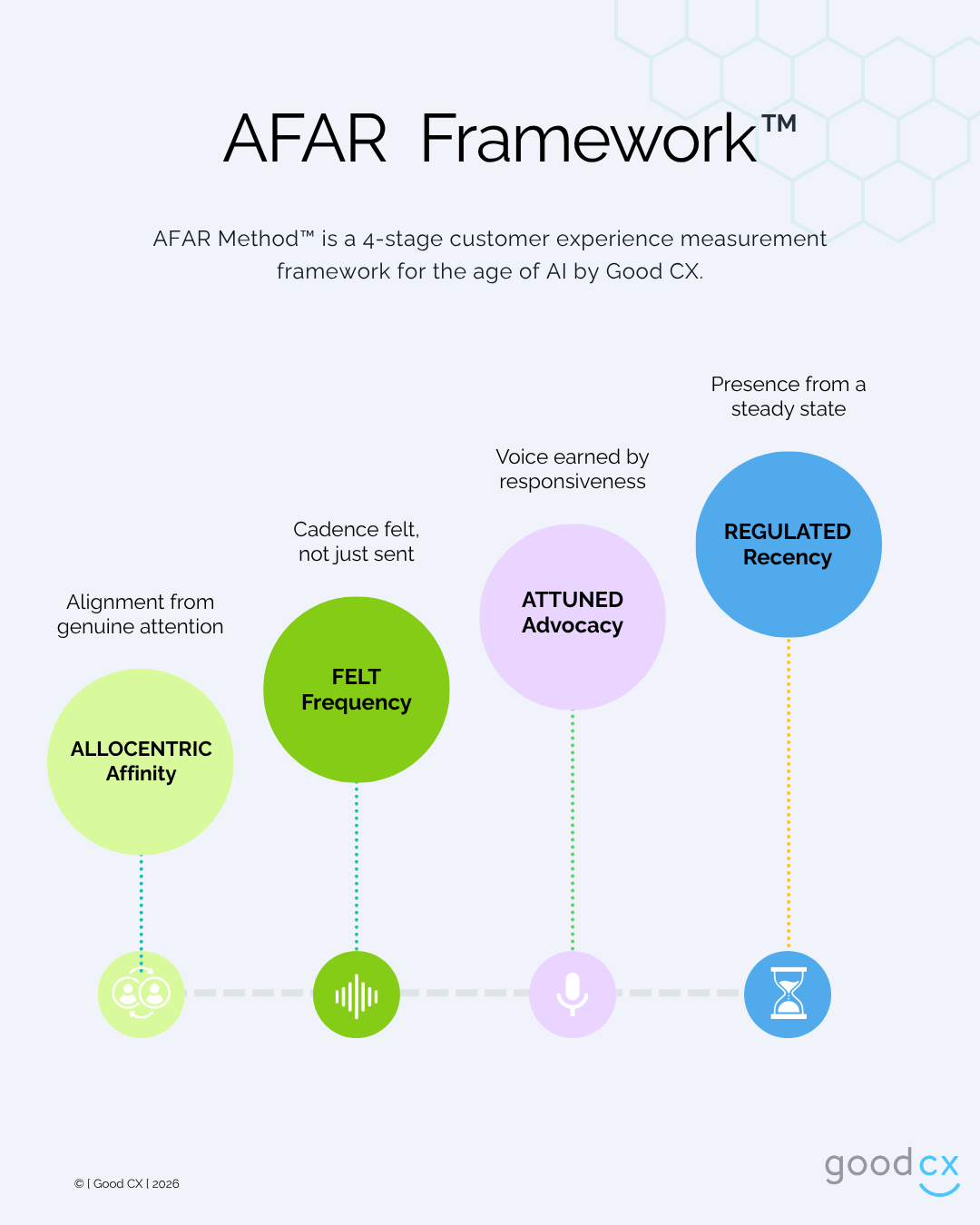
Media and citation
The key numbers, the graphics, the press release and a spokesperson bio, gathered in one place. Everything a journalist, an analyst or a student needs to quote the research accurately.
Media resources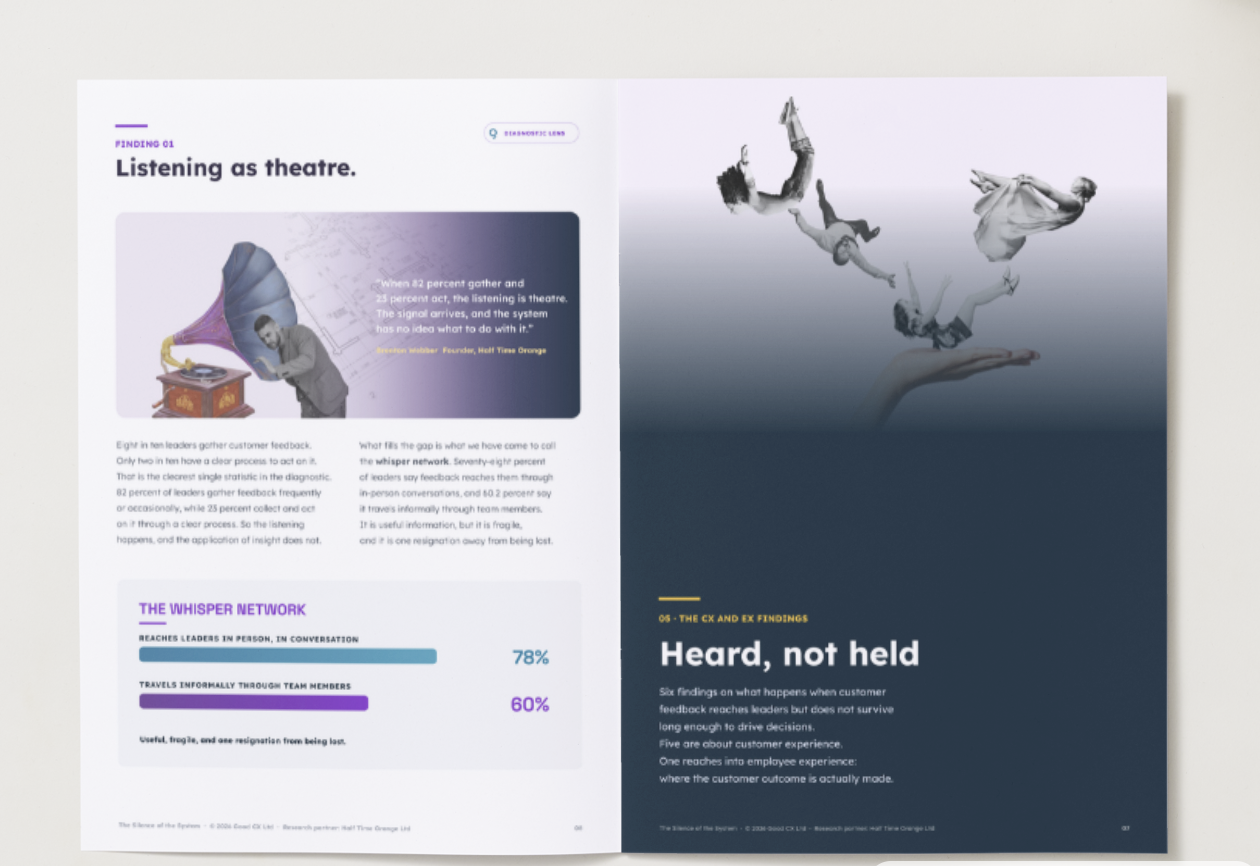
How the study grows
Join the next wave
The sample is live. Findings come from the Orange Zest readiness diagnostic, run with our research partner Half Time Orange.
Because of that, the study grows the way it started: same questions, more organisations, stronger patterns. Repeating the instrument is what turns a snapshot into a trend, which is where the comparisons start getting interesting.
So take the diagnostic and your organisation joins the next wave. It runs to about ten minutes, and you get your own readiness report back in exchange.
Take the readiness diagnostic
Read it with the caveats
Good CX is a member of the Research Association of New Zealand. The diagnostic was fielded between April 2025 and March 2026, and the sample was self-selecting.
So read the findings as patterns inside an engaged population rather than a national average. Base sizes vary by question, and the full method notes sit on the media page.
Questions about the research
Can I cite this research?
Yes, and please do. The paper is free and citable. The Crossing Model™ and the AFAR Framework™ are © 2026 Good CX Ltd, so cite them by name. If you need the headline numbers, the graphics or a spokesperson quote, the media resources page has them ready to use.
Who took part?
123 senior leaders across Australia and New Zealand: chief executives, general managers and directors spanning customer, people, operations and finance. The sample came through Half Time Orange’s Orange Zest readiness diagnostic, fielded between April 2025 and March 2026, and it was self-selecting, so the findings read as patterns inside an engaged population rather than a national average. Base sizes vary by question. The same diagnostic is how the next wave is being gathered.
What does it cost?
Nothing. Download it, forward it, and argue with it in your next leadership meeting. There is a short form on the paper’s page so the copy can reach your inbox, and so you hear about it when the next wave lands.
Who is the research partner?
Half Time Orange, run by Brenton Webber, who built the Orange Zest diagnostic the sample runs on. Half Time Orange brought the instrument, Good CX brought the qualitative lens and the models.
Is this only about customer experience?
No. The findings sit across customer experience, employee experience and leadership, because that is where the gap actually lives. It is built to be read across the table rather than filed in one function, and to stand up to a chief financial officer’s questions without apology.
Can we talk about what it means for our organisation?
That is usually the more useful conversation. Book fifteen minutes and bring the part of the paper that annoyed you most.
Writing that came out of the research
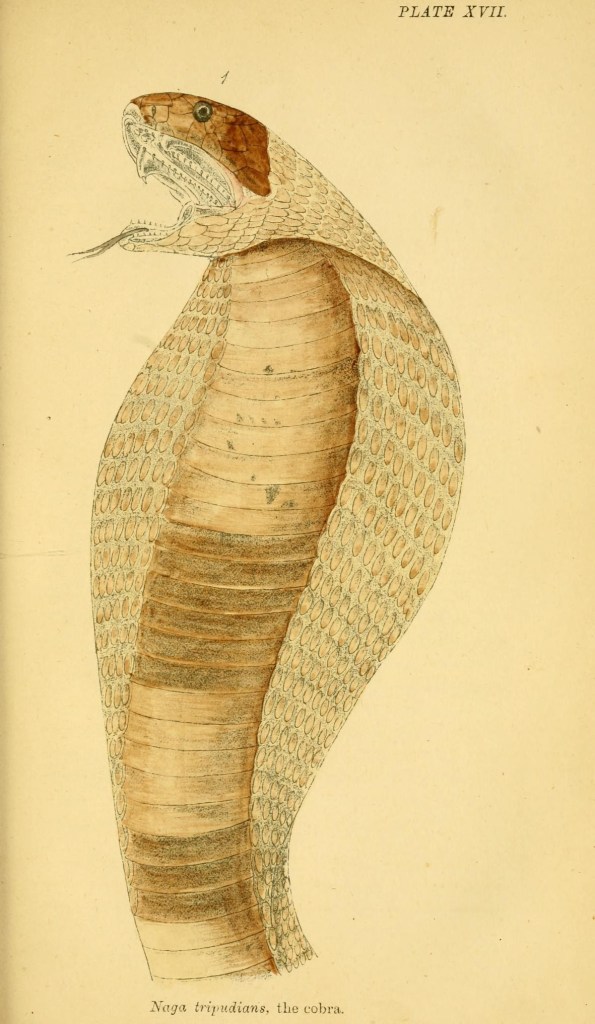
Counting cobras: why the number you reward stops telling the truth
Counting cobras: why the number you reward stops telling the truth

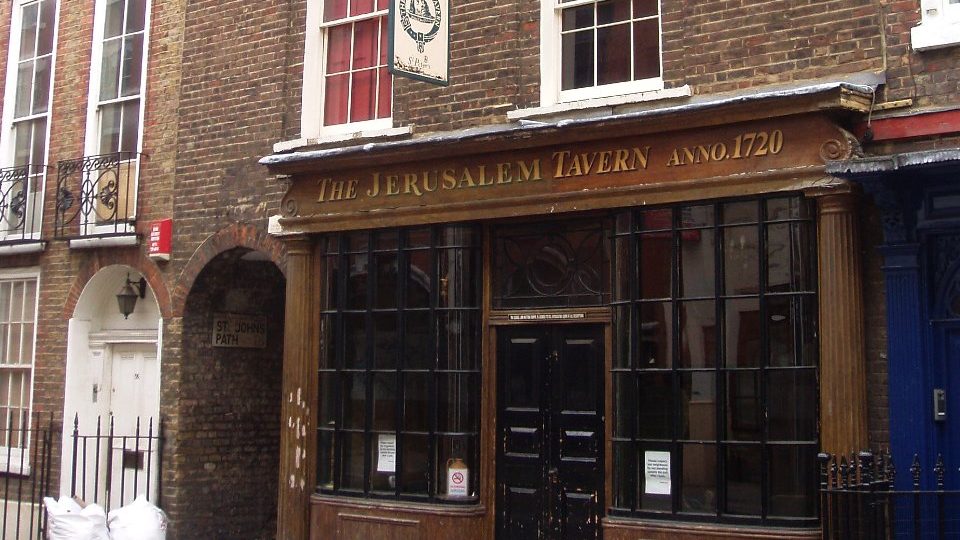
The pub is still open. It just isn’t the same pub. And your AI project has the same problem.
The pub is still open. It just isn’t the same pub. And your AI project has the same problem.


The Crossing Model: what is actually holding your customer experience up?
The Crossing Model: what is actually holding your customer experience up?