Our methodology

One practice, a few distinct methods

The conditions come first

One practice, a few distinct methods. Each earns its place by doing a job the others do not. Together they form our customer experience framework.

You have probably worked through a strategy framework before, and watched it move one team and barely shift another. Same slides, same steps, different result. The difference is rarely the method. It is the state of the people being asked to run it, and the conditions they are working in. This page sets out the methods that build those conditions first, and the order in which they tend to fit together.

That is the conviction underneath everything we do. Most consulting treats a business as a system of processes and assumes the people will follow. We work the other way round, on the human conditions first, and let the strategy follow. It is also what makes our customer experience framework unusual. We have a few of them, each doing a distinct job, and we built them to work together.

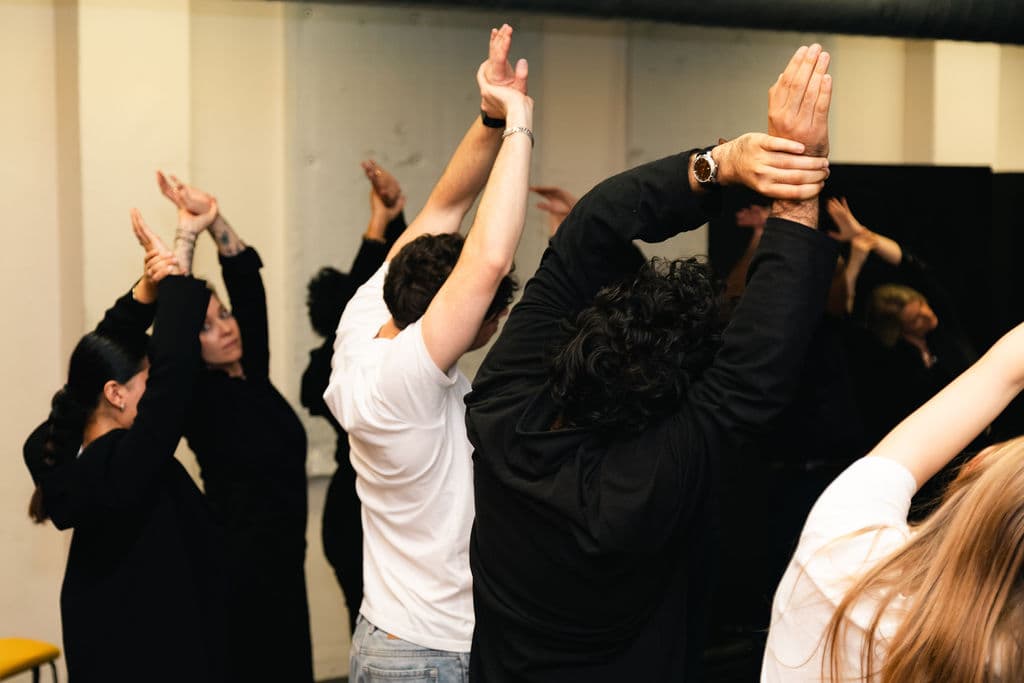
The group at a Good CX Innovation Lab at Auckland Theatre Company, standing together on stage at the end of the session.
The process

What is the Good CX methodology?

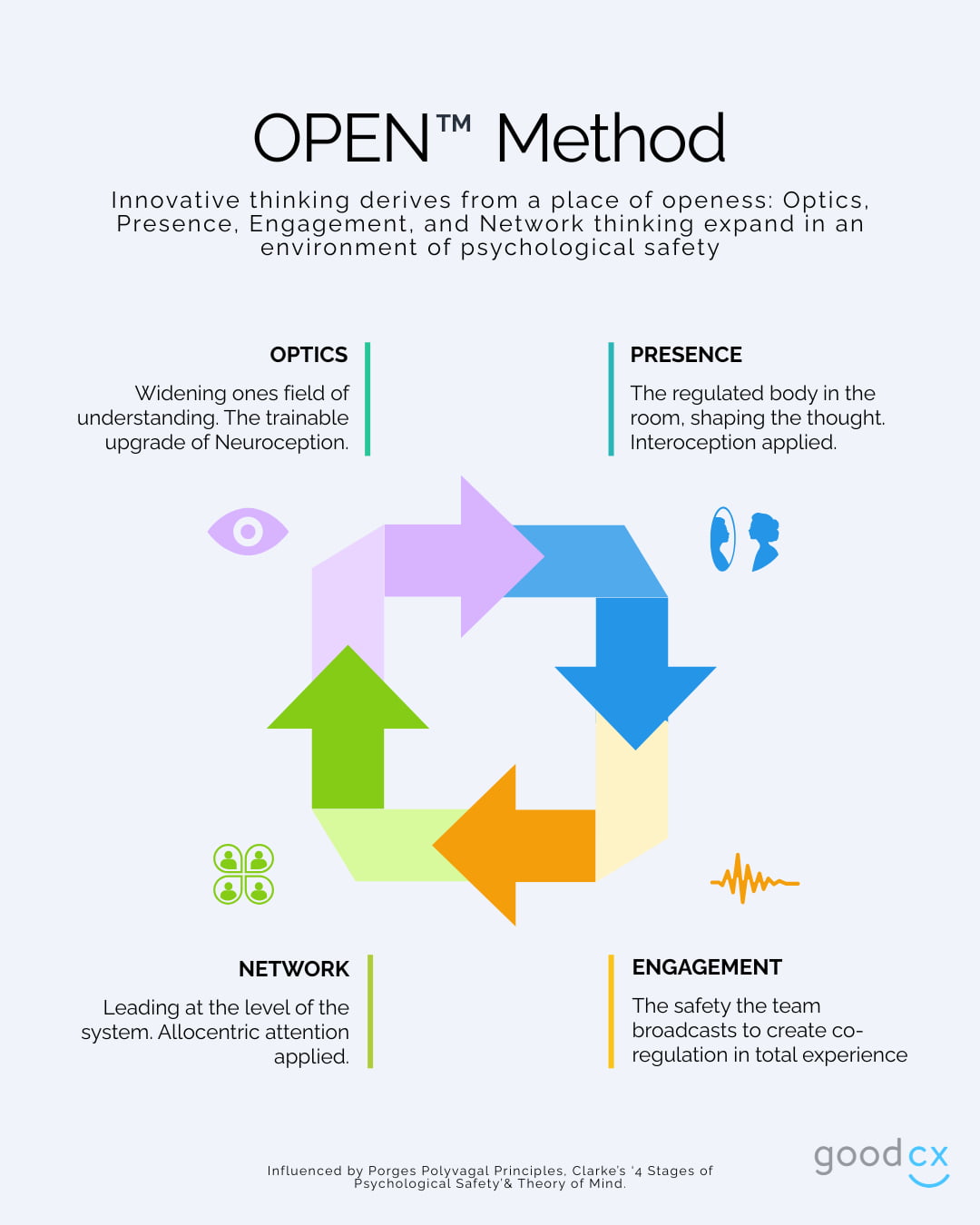
The Good CX methodology is a connected set of methods for getting better thinking out of real people under real pressure. It is a customer experience framework built as a working system: DISTIL finds the insight beneath the brief, the OPEN Method builds the nervous-system and employee experience and leadership (see our high performance leadership coaching) conditions a team needs to act on it, the Innovation Lab turns that into something built around a genuine unmet need, and the AFAR™ framework measures whether the resulting work actually moves the relationship over time. Underneath all of them sits one principle, drawn from polyvagal theory and psychological safety research. The state of a system, human before organisational, shapes what it can see and do.

How our customer experience framework fits together

They each stand on their own, but there is an order we tend to work in. First we find the truth beneath the brief. Then we build the conditions to act on it. Then we build the thing the truth points to. Then we measure whether the relationship is actually moving. The methods compound when used together. The measurement closes the loop.

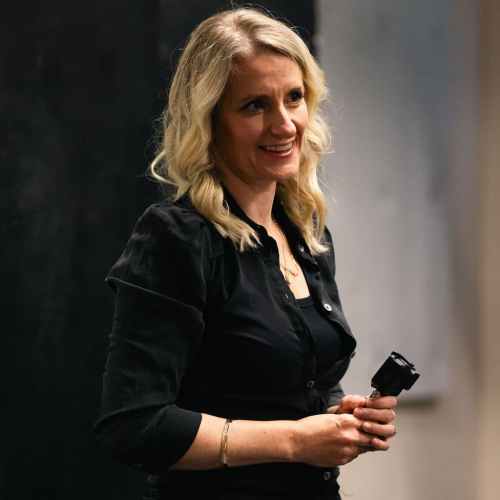
Liz Pinfold Reed leading a Good CX Innovation Lab session at Auckland Theatre Company.

Discover

First, find the truth. DISTIL is our discovery-to-strategy method. It gets beneath the brief to the real signal and the unmet need underneath the behaviour, so everything after it is built on evidence rather than assumption.

Conditions

Then, create the conditions. The OPEN Method is the polyvagal-informed work of shifting a team from defensive to expansive thinking. The sharpest strategy in the world dies in a room that does not feel safe enough to back it, so the conditions have to come before the cleverness.

Build

Next, build. The Innovation Lab is the facilitated environment where a team builds around the need DISTIL surfaced, using human-centred design to keep the work anchored to real people rather than internal assumptions.

Measure

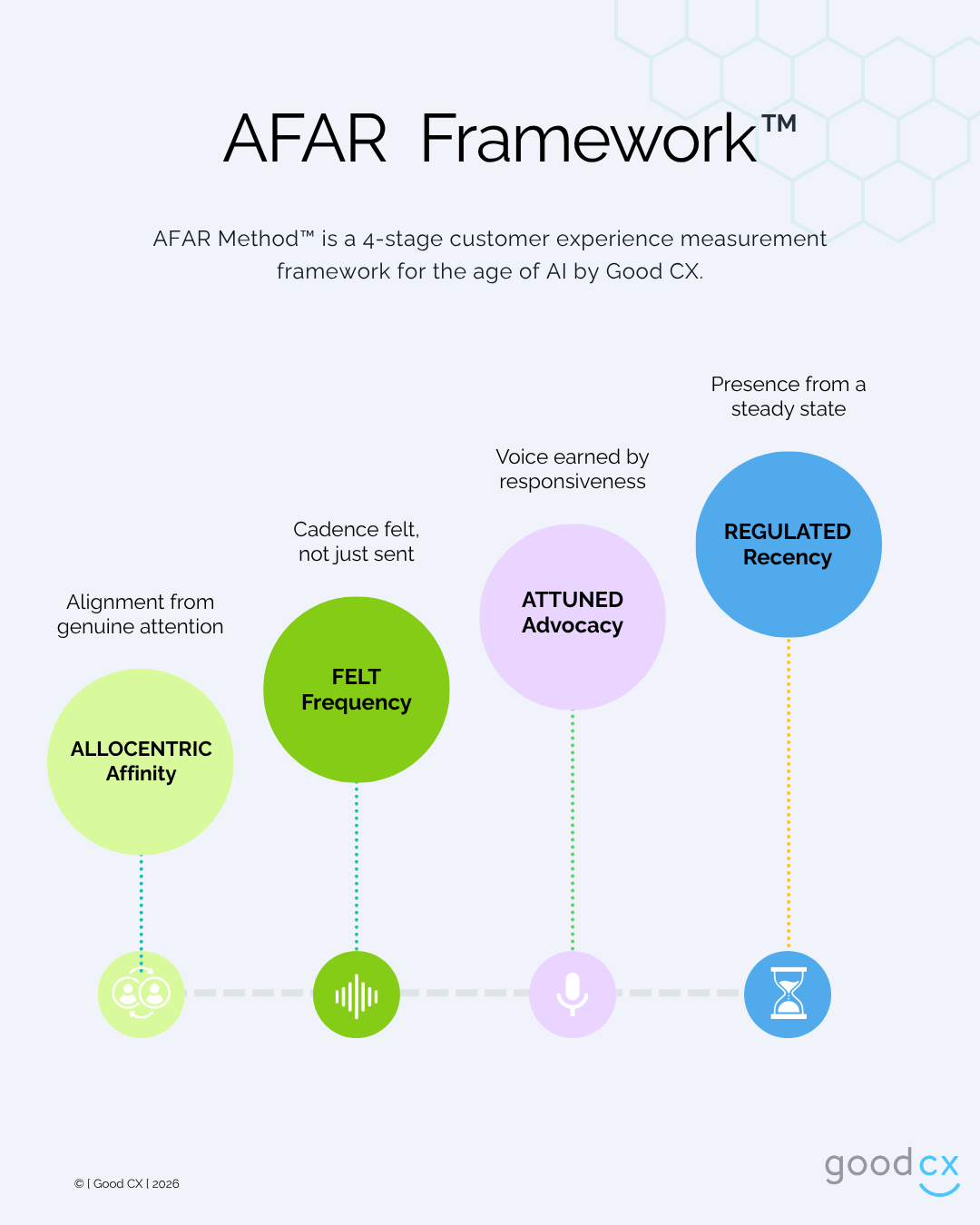
Finally, measure. The AFAR™ framework closes the loop, tracking four customer signals (Allocentric Affinity, Felt Frequency, Attuned Advocacy, Regulated Recency) each paired with the brand condition that generated it. It is what turns a promising intervention into a proven one.

Methods in our customer experience framework

Four distinct methods that compound when used together.

The OPEN Method

A polyvagal-informed system for shifting a team from defensive to expansive thinking. It treats the group as a physiological system first. Used when good thinking keeps dying in the room.

Explore the OPEN Method

DISTIL

Our discovery-to-strategy method for finding the real insight beneath the brief, so strategy rests on what is true. Reach for it when you are not yet sure what the real problem is.  Move toward discovery.

Explore DISTIL

Innovation Lab

Creating a facilitated environment where teams step back and build around the real unmet need. Bring us in when you know the need and want to build with momentum rather than meetings.

Explore the Innovation Lab

The AFAR™ framework

Track whether trust is actually accumulating. Four customer signals paired with four brand conditions. Use it to close the loop on the work the other methods do. See AFAR in practice in the East Care case study, a healthcare communications engagement.

Explore the AFAR™ framework
The AFAR framework by Good CX: four customer signals, Allocentric Affinity, Felt Frequency, Attuned Advocacy and Regulated Recency, each paired with the brand condition that generates it.

The Crossing Model™: the arch these methods sit inside

Every method on this page does one job. Listening turns what customers say into a decision. Conditions give your people the capacity to respond. Measurement tells you whether trust is holding.

The Crossing Model™ is the picture that holds them together: leadership as the keystone of an arch between your people and your customers, and one variable, the state of that keystone, that decides whether any of the methods get the chance to work. When it holds, capacity flows out and the signal flows back. When it contracts, or erodes through burnout, both stop moving.

Read the Crossing Model™

The Crossing Model by Good CX: leadership as the keystone of an arch spanning the structural hole between employee and customer, with movement joints, capacity flowing out to the team and the customer signal flowing back.

Which method is right for you


If you are not sure what the real problem is, start with DISTIL. When good thinking keeps falling flat in the room, OPEN is the entry. Once you think you know the need and want to build, the Innovation Lab carries the work. Not sure? That is usually the first conversation we have together.

A neon sign on a brick wall reading People fail forward to success.

Do I need all of the CX methodologies?

What is the difference between OPEN and DISTIL?

Is this only for customer experience?

Where should I start?

Not sure which of these fits your situation?

That is usually the first thing worth working out together.

Stu Reed of Good CX sitting in a hotel lounge with his notes in front of him, mid-conversation.