
I grew up on a Waikato dairy farm with no snakes. This country incredibly has none, making a woodpile a happier place for an afternoons work. Then I spent years working out of Singapore, which very much does, and I managed to avoid those too.
So I came to cobras late, and only by way of a story. Though more on that in a minute.
First, a hospital.
Every other farmer in my bloodline was a Brit, which is why a Whitehall sitcom came to be playing in a Waikato farmhouse long after it had stopped being topical anywhere else. Yes Minister, 1981. A minister gets shown round a brand new hospital with 500 administrative and ancillary staff and no patients. Not a shortage of patients. None at all.
The administrator is not bothered. “It is one of the best run hospitals in the country,” she tells him. “It is up for the Florence Nightingale Award.”
That award, she explains, goes to the most hygienic hospital in the area.
But you can see her point: Patients are filthy.
That is the cobra effect, or Goodhart’s law if you want the grown-up name. Once you have seen it, you will find it in your own board pack by COB.
What is Goodhart’s law?
Goodhart’s law says that when a measure becomes a target, it stops being a good measure. The economist Charles Goodhart worked it out in 1975. The anthropologist Marilyn Strathern gave us the short version in 1997, and Donald Campbell got there independently in 1979. Attach a reward to a number and you stop measuring your business. You start measuring how good your people are at moving that number. And they are usually very good at it.
I got this off Instagram
I am not going to pretend I found this in a journal. I found it on a reel, somewhere between a cyclist and a cow.
The same reel told me about the cobras. Colonial Delhi, bounty on dead snakes, locals start breeding cobras, bounty scrapped, breeders release the stock, city ends up with more snakes than it started with. Brilliant story. But it remains the standard parable for perverse incentives, and it has been wheeled out at many a conference since.
Except it never happened.
Nobody has ever produced evidence of a single cobra farm. It surfaced as gossip in 1873, the Bombay Natural History Society looked into it in 1887 and called it highly improbable, and the phrase “cobra effect” was not coined until 2001, by a German economist who did not check. Imagine my surprise when a 16 year old told me (gleefully) I’d been duped.
So the world’s favourite parable about bad measurement is itself a made-up number that travels well. Which is the joke, and also the point. Because the algorithm that served me both stories is optimising for exactly what the cobra farmers were.
Reach. Not truth.

Naja tripudians, the cobra. Plate XVII from Edward Nicholson’s Indian Snakes, 1874. Public domain, via Wikimedia Commons and the Biodiversity Heritage Library.
The rats are real, though
Hanoi, 1902. The French had just given the city a cracking new sewer system and then noticed what lives in sewers. So they offered a bounty. One cent a rat. And rather than have anyone carting dead rats around, they took a tail as proof.
Then inspectors started finding rats around Hanoi with no tails.
Catchers were trapping them, removing the tail, and releasing the animal to go and make more rats. Out in the countryside there were rat farms. Actual farms. For rats. Because of course there were.
Nobody in this story did anything irrational, including the rats.
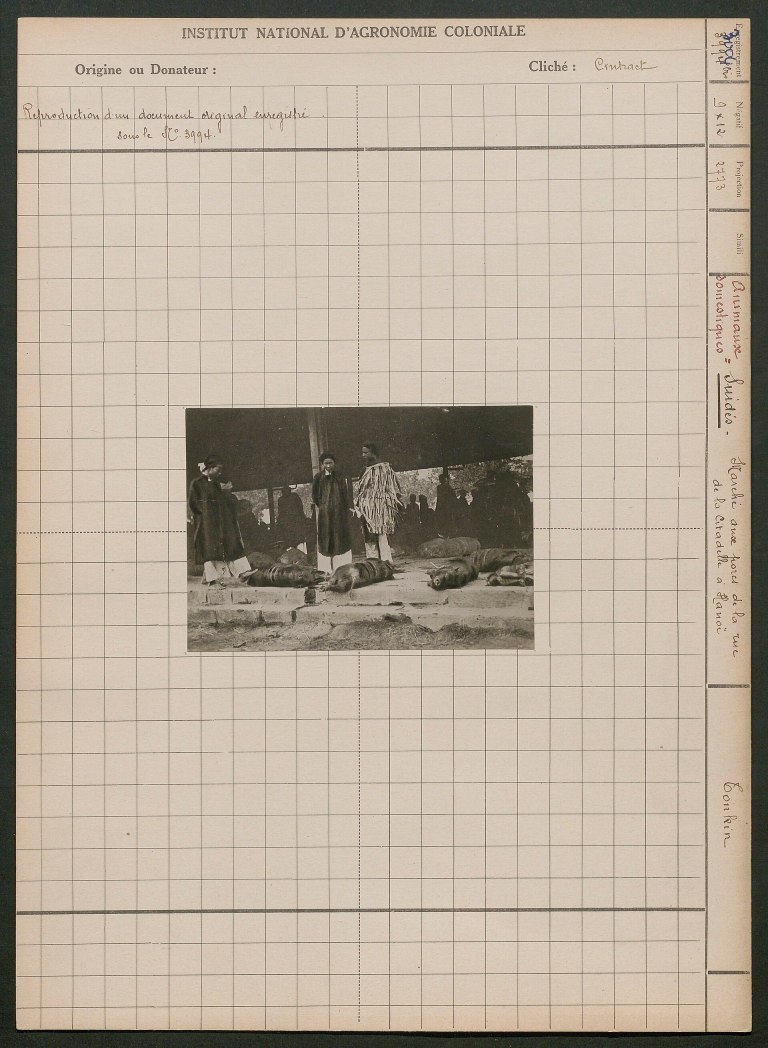
A street market on the citadel road in Hanoi, early twentieth century. Albert Cintract, Bibliothèque nationale de France. Public domain, via Wikimedia Commons.
Sell-in is not a sale
I have spent my career in drinks and FMCG, and I watch this happen in a P&L with all the inevitability of a Phil Taylor final.
Put the bonus on top-line revenue and you will get top-line revenue. You will also get discounting, because price is the fastest lever anyone has. You will get customers nobody credit-checked, because whether they actually pay is somebody else’s problem.
The expensive version is quieter. A rep has a quarter to close and a distributor with a warehouse. So the stock moves. Then the revenue books. Number goes green, bonus pays, everyone claps.
But nothing was sold. Inventory simply changed address.
Next quarter opens with a customer who needs nothing and a forecast built on a loan. That is tail-cutting in a better suit.
When a number gets gamed, look up
So here is the bit that should bother you.
In 2009 we brought in the Shorter Stays in Emergency Departments target. Ninety-five percent of patients seen, admitted or moved within six hours. Researchers studied four hospitals and published the results in 2020.
They found clock-stopping, which adjusts when a departure gets recorded. And decanting, which shifts patients into short-stay beds so the six hours never technically breach. Gaming picked up once the genuine improvements had run out, because the number still had to go up.
And then the finding, which is the one that matters. The researchers traced the worst gaming to the strategies of senior management, not the motivations of frontline staff.
When a measure gets gamed we look down, at whoever typed the numbers in. We should be looking up, at whoever picked them.
One that works: the milking shed
Back on the farm you get paid per kilogram of milk solids. More solids, more money. On its own that is a volume target, and you know where those end up.
Except a second number pulls the other way. Treat a cow with antibiotics and her milk stays out of the vat for the withholding period. Let it in and the residue triggers an inhibitory substance grade, and the milk is worth nothing.
But here is the part the dairy company never wrote down. Nobody in our shed was thinking about grading schedules. What kept the penicillin out of that vat was the withering stare from Dad if so much as a sniff of it walked past the herringbone.
The company set the measure. Dad enforced it.
Most businesses get the first bit right, then wonder why it never holds. People in gumboots had that sorted long before it turned up in a management journal.

The herd at the feed shelter. Out of shot, a vat that never once saw a drop of penicillin.
Three things to do about it
Pair every number with its natural enemy. Volume with margin. Speed with rework. New customers with retention at twelve months, which is the pairing most businesses get wrong first. If someone can move one without the other moving, you have built a lever, not a gauge.
Ask your three sharpest people how they would cheat. Seriously, out loud, with no consequences. They will tell you, and they will enjoy it. Whatever they say is what you have just commissioned.
Keep one number nobody is paid to move. So no bonus, no dashboard tile, and nobody whose year depends on it. Complaint themes. Repeat purchase. What your oldest customers say when nobody is selling to them. That last one only works if somebody is actually listening to it, but it is the only number still telling you the truth.
What you reward is what you become
An incentive is not a thermometer. It is an instruction about what sort of company you would like to be, and your people will follow it exactly. That is the problem, not the exception.
And attention works the same way. Whatever you ask about in the first ten minutes of every meeting is what the business organises itself around by Christmas. You never have to write it down. That is your version of the stare.
Which takes us back to that hospital. It was not failing. It was excelling, at exactly what it had been asked to do, and it had the award nomination to prove it.
So there is a number in your reporting in exactly that condition right now. Beautifully met. Spotless. Empty.
We went and checked how common this is
Your CFO has one question about any number that keeps getting hit. Not whether it moved, but what you paid to move it, and what came back.
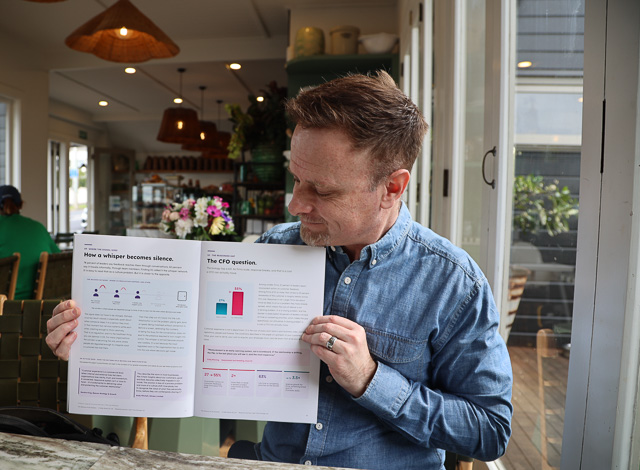
Our research partner Brenton Webber considers the CFO question.
With Half Time Orange we asked 123 senior leaders across New Zealand and Australia what actually happens to the things they measure.
Eighty-two percent gather customer feedback. Twenty-three percent act on it through a clear process.
That gap is this entire article, with a sample size attached. The Silence of the System is free, and it is where we have spent most of this year.
The latest thinking from Good CX
Ideas worth arguing with
Every so often we share what we’re learning about customers, the people who serve them, and what a leader can do with it. If we get in touch, it’s with something worth pulling apart with your team. Unsubscribe in one click.
You’ll get one confirmation email first, so we know it’s really you. We handle your details in line with our privacy policy.