
New Zealand’s AI adoption sits at 83 per cent. Its project failure rate is above 80. The distance between those two numbers is measured in people, not technology.
AI adoption in New Zealand has well and truly happened. Eighty-three per cent of businesses are using it, which is global pace, so nobody is behind. Phew. What has not happened is preparation. Just 4.1 per cent of New Zealand firms give AI ownership to their people function. Globally, meanwhile, only 16 to 23 per cent of staff receive training before the tools arrive. RAND puts the AI project failure rate above 80 per cent, twice that of other IT projects. Crucially, it names leadership misunderstanding rather than technology as the leading cause. The work that closes that gap is not technical – sorry guys. It is writing the actual problem to solve down: deciding what evidence would prove it worked, and preparing the people who will live with the answer.
“I think there’s a pain somewhere in the room, but I couldn’t positively say that I have got it.” Hard Times, Charles Dickens, 1854
Dickens wrote that about a woman who had spent thirty years married to a man who measured everything. I once worked with a senior exec, Big Four by training and later washed up in e-commerce. He sat through creative pitches punching furiously at a calculator, trying to put a number on an idea before it had got off the ground. He terrorised a generation of art directors that way. However, I learnt more about financials in those rooms than I ever did on a course. Chiefly that they sat at the dead centre of everything, not the customer, who was jostling to come into the middle of the room through the tradesman’s entrance (or not at all).
I have pondered on that man a great deal this month, because two pieces of research landed within a fortnight of each other and both of them are about him.
The first is the Employers and Manufacturers Association’s Workforce 2030 paper, which benchmarks AI adoption in New Zealand at 83 per cent. Second is RAND’s work on why AI projects fail, which puts the failure rate above 80 per cent, twice the rate of IT projects with no AI in them. So almost everybody is doing it, and almost nobody is getting it to work.
If somebody has told you this month that you are behind on AI, that is the number they left out, so don’t sweat it.
What is really going wrong with AI adoption?
AI adoption here is running at global pace. The failure is not in the buying. The desire. Or the tempo. It is in the preparation, because organisations invest in tools faster than they invest in people. And because leaders rarely write down the problem the technology is meant to solve. RAND finds leadership misunderstanding, not immature technology, to be the leading cause of failure. Workforce readiness, not capability, is the constraint.
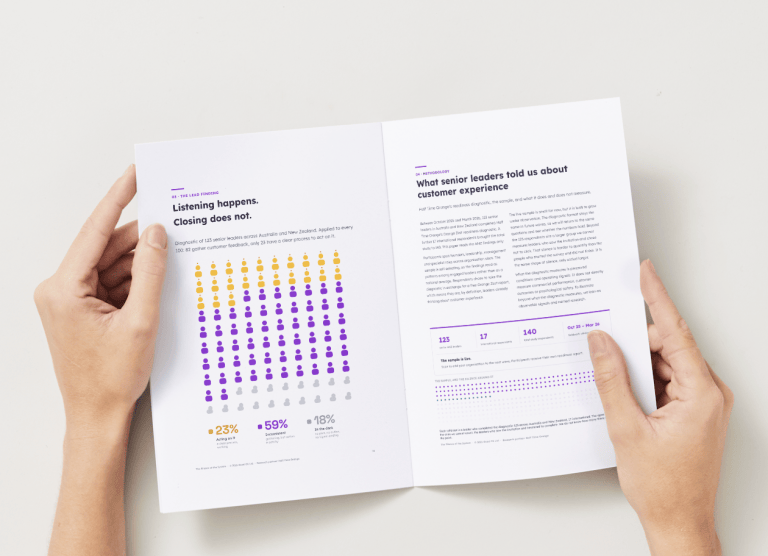
82 per cent of leaders gather customer feedback. 23 per cent have a process to act on it.
That gap is what this article is really about. The Silence of the System is our study with Half Time Orange across 123 senior Australian and New Zealand leaders. Free to download.
But that is a difficult thing to prove in a blog, so let me show you a building instead.

The Jerusalem Tavern, Britton Street, Clerkenwell. Photograph by Ewan Munro, cropped, CC BY-SA 2.0, via Wikimedia Commons.
Why AI adoption is not a technology problem: a pub that has been an information network for three hundred years
Around the corner from my old office in Aldersgate, better known to you perhaps as the stomping ground of Jackson Lamb and the Slow Horses, there was a pub called the Jerusalem Tavern. Panelled, candlelit, gloriously impractical, and by six o’clock so full that most of the drinking happened on the pavement. I spent a decent portion of my London years there failing to have early nights. Stu Reed, who now keeps the numbers honest at Good CX, was across the table for a fair few of them, drinking the chocolate porter. We spent most of that decade on opposite sides of the argument this article is about, and it took a hemisphere and about fifteen years to settle it.
The building went up in 1719 as the Jerusalem Coffee House, which is worth pausing on, because a coffee house is an information network with a drinks licence. That is the whole invention. Lloyd’s of London began in one. For three centuries that address existed so people could tell each other things they would not put in writing.
Then it was a merchant’s house. Then a workshop for watch and clock craftsmen, this being Clerkenwell, where England went to have time measured properly. Johnson drank there, and Hogarth, and a young Handel, and if the house history is to be believed a fair portion of the rest of eighteenth century London. St Peter’s Brewery took it on in 1996 and put the 1700s back into it.
Dickens, as far as anyone can prove, never had a pint in it. But Bleeding Heart Yard is a few minutes away and he liked it enough to move the Plornish family in there in Little Dorrit. He would have come along that pavement, probably in a hurry, probably late. The building was already 130 years old and full of watchmakers when he did. He called the Yard “a place much changed in feature and in fortune, yet with some relish of ancient greatness about it”. As it turns out, that is the caption for what happened next.
The pub is still open. It has a different name now, and a different brewery, and if you walked down Britton Street tonight you would notice nothing at all. Same shop front, added around 1810. Same panelling. Same crowd on the same pavement. Everything you could count is exactly as it was.
That gap, between what you can count and what has actually gone, is the shape of what every piece of AI research keeps finding.
Is New Zealand behind on AI adoption? Not whatever you were told at breakfast
The warning usually arrives with a slight wince, and increasingly often from a vendor with a demo already loaded and your logo on the title slide.
The EMA’s 83 per cent splits into 57 per cent piloting or experimenting and 26 per cent with AI genuinely embedded in something. McKinsey’s global survey, fielded in the middle of this year, has nearly nine in ten organisations using AI in at least one function. Boston Consulting Group asked 11,749 workers across 14 markets and found 74 per cent of frontline staff are now regular users, up 23 points in twelve months.
So whatever gap you were sold, you are not in it. You bought the tools when everybody else did. That was the easy part, and also the part that mattered least.
Why AI projects fail: every organisation now has a Slough House
Herron’s joke, for the two of you who have not watched it (for shame), is that MI5 keeps a building on Aldersgate Street where it parks the agents it has stopped listening to. The Slow Horses are not sacked. They’re given meaningless paperwork to bore them into leaving of their own accord.
You almost certainly have remnants of Slow Horses living in the shared drive folder of pilots nobody mentions, accruing licence fees.
RAND interviewed 65 practitioners, 50 from industry and 15 from academia, to arrive at that 80 per cent. S&P Global asked over a thousand businesses across North America and Europe. Of those, 42 per cent had abandoned most of their AI initiatives during 2025, up from 17 per cent the year before. I can hear your sigh when you hear that nearly half of all proofs of concept never reached production. Gartner expects more than 40 per cent of agentic AI projects to be cancelled by the end of 2027.
You may also have seen the MIT figure of 95 per cent doing the rounds on LinkedIn. Go easy on it. It rests on 52 interviews and a narrow definition of return, and it has taken a fairly thorough kicking since. But to be fair sturdier numbers are frightening enough.
The useful part of the RAND work is not the headline, but the post-mortem. The leading cause of death is not thin data or a shortage of eager engineers. It is unwitting business leaders who misunderstand the problem (understandable), optimise for the wrong measure, and never quite tell the builders what they actually wanted.
Your projects will not die at the technology stage. But they will die at the question stage.

“The commercial question I ask at the start is never what the AI will do. It is what you expect to point at in twelve months and say that moved. If nobody in the room can answer that on day one, the project is already in trouble.”
What are businesses actually using AI for? Defining the horse, not riding it
Gradgrind opens Hard Times with a line that has aged into a boardroom slogan. “Now, what I want is, Facts.”
He then asks his classroom to define a horse. Sissy Jupe, who grew up in a circus and has known horses in her hands since she could walk, goes scarlet and says nothing. Bitzer, who has never been within kicking distance of one, produces quadruped, graminivorous, forty teeth. Gradgrind is delighted. Girl number twenty is instructed to consider herself corrected.
The man with the calculator was Bitzer, and he was rewarded for it, because a number goes into a board pack and an idea does not.
I should be careful here, because I went on to marry a walking calculator. Stu is the reason this practice can read a P and L bless him, and the reason I stopped treating finance as the opposition. The problem was never the arithmetic. The problem was that the arithmetic arrived first, and alone, and nobody had asked what it was for.
The EMA found the most common uses of AI in New Zealand businesses are content creation and rewriting at 38.7 per cent, summarising documents at 33.9 per cent, and data analysis at 22.1 per cent. All perfectly useful. Also, more or less, industrial Bitzer. Forty teeth, at scale, at speed, from something that has never met your customer or felt their need.
Who owns AI in your business? Permission without preparation
The EMA’s most revealing number is the one nobody quotes. Ownership of AI sits with executive leadership in 33.3 per cent of New Zealand businesses. It sits with HR or People functions in 4.1 per cent.
A technology that changes what every person in your building does each day, run almost entirely as an IT upgrade. Twenty years on from the calculator, and the tradesman’s entrance is still doing a brisk trade. Herron understood the arrangement. Slough House has a front door on Aldersgate Street that nobody ever opens, and everyone who works there comes in round the back.
The consequences turn up in the training figures. Skillsoft found 86 per cent of individual contributors and 93 per cent of managers using AI at work. Yet only 16 per cent and 23 per cent respectively get any training before the tools land. Twenty-four per cent strongly agree their employer prepared them. Microsoft’s Work Trend Index, across 20,000 workers in ten countries, puts just 19 per cent of people in the zone where both they and their organisation are genuinely ready. The rest of us are, in the technical term, winging it.
Untrained deployment produces a very particular kind of managerial fury, the sort felt by a leader watching people fail to use a tool that nobody showed them.
”Bringing you up to speed is like trying to explain Norway to a dog.
Jackson LambSlow Horses, series one

Norway.
The dog, in this arrangement, has done nothing wrong.
Then the value leaks out of the bottom. McKinsey found 80 per cent of respondents reporting improved personal productivity, while only 6 per cent of organisations qualify as high performers on financial impact. Six. Out of a hundred. BCG found 42 per cent of frontline regular users now save at least a full working day every week, and 66 per cent get little or no guidance about what to do with it.
A day a week, handed back, and nobody said what it was for. There is a pain somewhere in your P and L, and nobody could positively say that they have got it.
How does customer feedback actually reach you? Sideways, and usually over a packet of pork scratchings
The Elizabeth line opened in 2022. It stops at Farringdon, two minutes from that door, and it will have you at Heathrow inside the hour.
I loved that pub and I am aware London did not rename it to just to spite me. But something has changed on that street, and it was not the panelling. When the fast train arrives, the six o’clock pavement thins. People go home, which is sensible and healthy and a small catastrophe for a building whose entire purpose, for three hundred years, was people telling each other things.
The pub was never nostalgia. It was an operating model, and your business is running the same one. In The Silence of the System, our research with Half Time Orange across 123 senior Australian and New Zealand leaders, 78 per cent of leaders said customer feedback reaches them through in-person conversations. Similarly, 60.2 per cent said it arrives informally, via a team member. Meanwhile 82 per cent gather feedback and 23 per cent have a clear process to act on it.
Put those together and the picture is bleak and faintly comic. The formal system barely functions. What holds your organisation up is people telling each other things, on a pavement, over pork scratchings. It is a magnificent piece of infrastructure and it is one resignation away from being lost.
Now lay AI across it. Eighty-three per cent adopt. Somewhere between 16 and 23 per cent prepare their people. The tools got faster, the pavement emptied, and every number on the dashboard held steady.
The mechanism underneath is not strategic, it is biological. Stephen Porges’s polyvagal work describes a mobilised state, braced and defended, which is where most workplaces live. Amy Arnsten has documented how stress hormones impair the prefrontal cortex, which is inconveniently the part you need for judgement. Amy Edmondson’s twenty years on psychological safety arrives at the same door from the other side.
A mobilised organisation buys tools. But a regulated one asks questions first…and bothers to listen. And a board that has been told it is behind is, by definition, mobilised.
”I rarely see a business that doesn’t care. What I see much more often is a business that hasn’t made the next step clear. The feedback’s there, the tools are there, but nobody’s quite written down what needs to change, who owns it, and how they’ll know it worked.
Brenton WebberFounder, Half Time Orange
Should you wait until after the election? Stepping back is not the same as waiting it out
They measured time properly in Clerkenwell. Not quickly, properly, which took a workshop full of people and a great deal of patience, and produced instruments that still keep time three hundred years later. Nobody ever rushed a chronometer.
New Zealand votes on Saturday 7 November. Election years do something predictable to commercial decisions. Capital waits. Hiring waits. Large commitments get parked until the picture clarifies, and a good deal of ordinary deferral gets rebranded as prudence somewhere around October.
That is not what I am arguing for. Waiting is passive and it costs you the learning. Stepping back is active, and it is short. Name the problem before you name the tool. Decide what evidence would prove it worked. Prepare the people who will have to live with it.
I am conscious that a strategist recommending more thinking is roughly as surprising as a dentist recommending floss, so here is somebody else’s number. BCG found a clear AI strategy lifted measurable business impact by 25 percentage points. Better tools alone moved it by five.
Five for the platform. Twenty-five for the pencil.
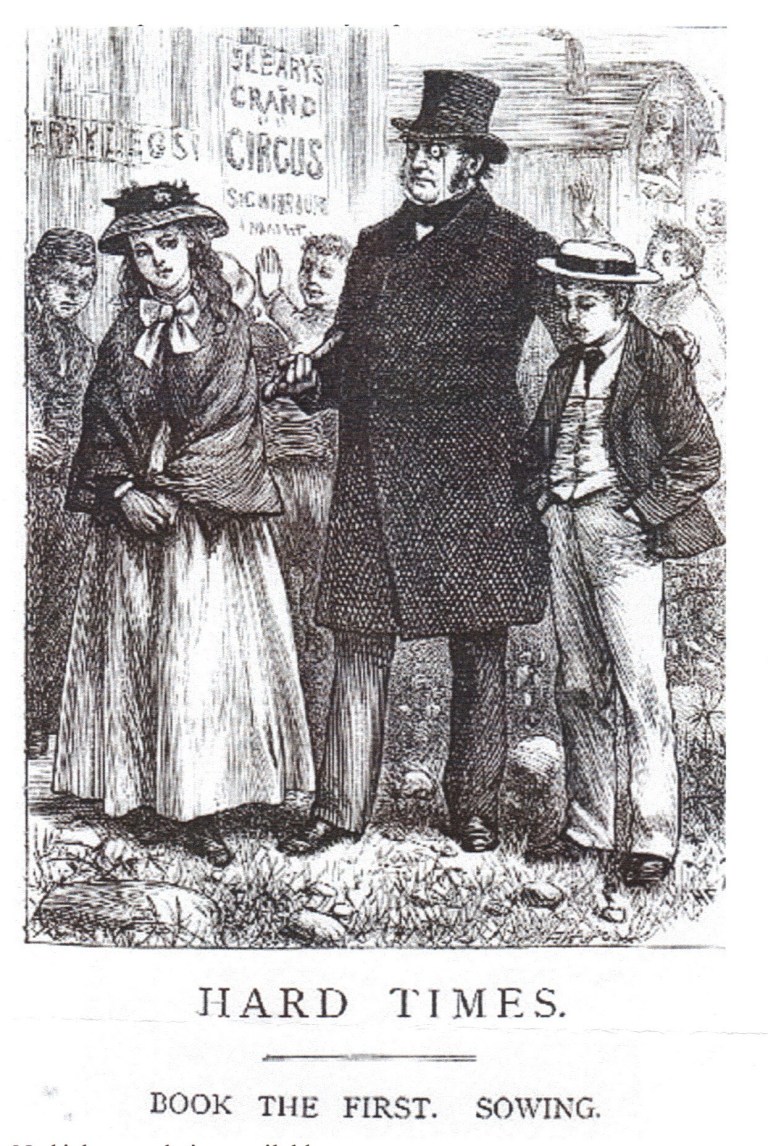
Gradgrind removes his children from Sleary’s Circus. Harry French, Household Edition of Hard Times, 1870s.
How to plan an AI project: six things to do before you buy anything else
1. Write the problem down in one sentence
If it needs a paragraph you do not have a problem, you have a topic. RAND’s leading cause of AI project failure lives entirely inside this step, which makes it the cheapest risk reduction available to you.
2. Decide what would count as evidence
Name the number, the customer behaviour or the hour saved that would prove the thing worked. Agree it before procurement, not during the post-mortem.
3. Move ownership closer to your people
Four point one per cent is not a governance model, it is an oversight. In both senses. Put somebody with a people mandate in the room before the tool is chosen, not after it lands.
4. Train before you deploy
Sixteen per cent is the global bar for training staff ahead of deployment, so clearing it is not difficult. Clearing it properly is a real advantage while everyone else is still forwarding the LinkedIn post.
5. Say what the reclaimed time is for
If AI gives your team a day a week back, that day will be absorbed by whatever shouts loudest, which is usually email, unless somebody names its purpose out loud.
6. Open the front door
Find the three places where a customer signal loses its owner, and give it a route that does not depend on somebody happening to mention it on a pavement. If that is the piece you want help with, integrating AI into your business is where we start.
Frequently asked questions about AI adoption
What percentage of AI projects fail?
RAND research puts the figure above 80 per cent, roughly twice the failure rate of IT projects that do not involve AI. S&P Global found 42 per cent of businesses abandoned most of their AI initiatives during 2025, up from 17 per cent the previous year, and that 46 per cent of proofs of concept never reached production. A widely shared MIT figure of 95 per cent should be treated with caution, as it rests on 52 interviews and a narrow definition of return.
Is New Zealand behind on AI adoption?
No. The Employers and Manufacturers Association’s Workforce 2030 paper puts New Zealand AI adoption at 83 per cent, which is in line with global figures. McKinsey reports nearly nine in ten organisations worldwide using AI in at least one business function, and BCG found 74 per cent of frontline workers across 14 markets are now regular users. New Zealand’s gap is in workforce readiness, not adoption.
Why do AI projects fail?
RAND’s research names leadership misunderstanding as the leading cause: business leaders misidentifying the problem, optimising for the wrong measure, and failing to communicate intent to technical teams. Immature technology and insufficient data are contributing factors rather than primary ones. Most AI projects fail before any technology is built, at the point where nobody wrote down what problem the tool was meant to solve.
How many New Zealand businesses are using AI?
Eighty-three per cent, according to the EMA’s Workforce 2030 white paper. That splits into 57 per cent piloting or experimenting and 26 per cent with AI embedded in a business process. The most common uses are content creation and rewriting at 38.7 per cent, document summarisation at 33.9 per cent, and data analysis at 22.1 per cent.
Who should own AI in a business?
In New Zealand, AI ownership sits with executive leadership in 33.3 per cent of businesses and with HR or People functions in just 4.1 per cent. That imbalance treats AI as a technology upgrade rather than a workforce transformation. Because the constraint is workforce readiness, ownership should include someone with a people mandate alongside technical and commercial leadership.
How does customer feedback actually reach business leaders?
Mostly informally. In The Silence of the System, research by Good CX and Half Time Orange across 123 senior Australian and New Zealand leaders, 78 per cent said customer feedback reaches them through in-person conversations and 60.2 per cent said it arrives via a team member rather than a formal process. Meanwhile 82 per cent gather feedback and only 23 per cent have a clear process to act on it, which makes the informal channel the load-bearing one. The study was run through Half Time Orange’s Orange Zest readiness diagnostic.
Should we wait until after the election to invest in AI?
Waiting and planning are different things. Deferring a decision until political uncertainty clears is passive and costs you the learning that early, small, well-defined projects generate. Stepping back is active and short: naming the problem, defining the evidence, and preparing your people. BCG found a clear AI strategy lifted measurable business impact by 25 percentage points, against five points for better tools alone.
What is the first step in an AI project?
Write the problem down in one sentence. If it takes a paragraph, you have a topic rather than a problem. Then decide what evidence would prove the project worked, and agree that measure before procurement rather than during the post-mortem. Both steps address RAND’s leading cause of AI project failure and cost nothing but time.
Where to start with AI adoption: buy the crisps
Sissy Jupe never does learn to define a horse. By the end of the novel she is the only person in Coketown who understands anything, which Dickens rather enjoys, and which most organisations rediscover about eighteen months into a transformation programme.
There is a decent joke buried in Britton Street. For two centuries that address held people building instruments to measure time properly. It is now served by a railway line that saves you a few minutes, and the pavement outside empties at the hour it used to fill. Much changed in feature and in fortune, and every metric holding steady.
Your AI decision is the same decision. Not whether to make it, because nearly all of your competitors already have, and four in five of them are about to find out it did not work. The decision is whether you write the problem down first, and whether the people who will live with the answer were ever in the room.
AI may well be your Maserati. The instrument for steering it is still the pencil, and occasionally a packet of pork scratchings and forty minutes you did not strictly have.
If you are near one of these decisions, fifteen minutes is usually enough to work out whether you have a problem worth solving or a tool looking for one.
The latest thinking from Good CX
Ideas worth arguing with
Every so often we share what we’re learning about customers, the people who serve them, and what a leader can do with it. If we get in touch, it’s with something worth pulling apart with your team. Unsubscribe in one click.
You’ll get one confirmation email first, so we know it’s really you. We handle your details in line with our privacy policy.