Have you ever sat opposite someone, smiling politely, while a completely different conversation runs in your head? The one where you are working out whether you can afford this, whether they will actually deliver, whether your team will forgive you if it goes sideways?
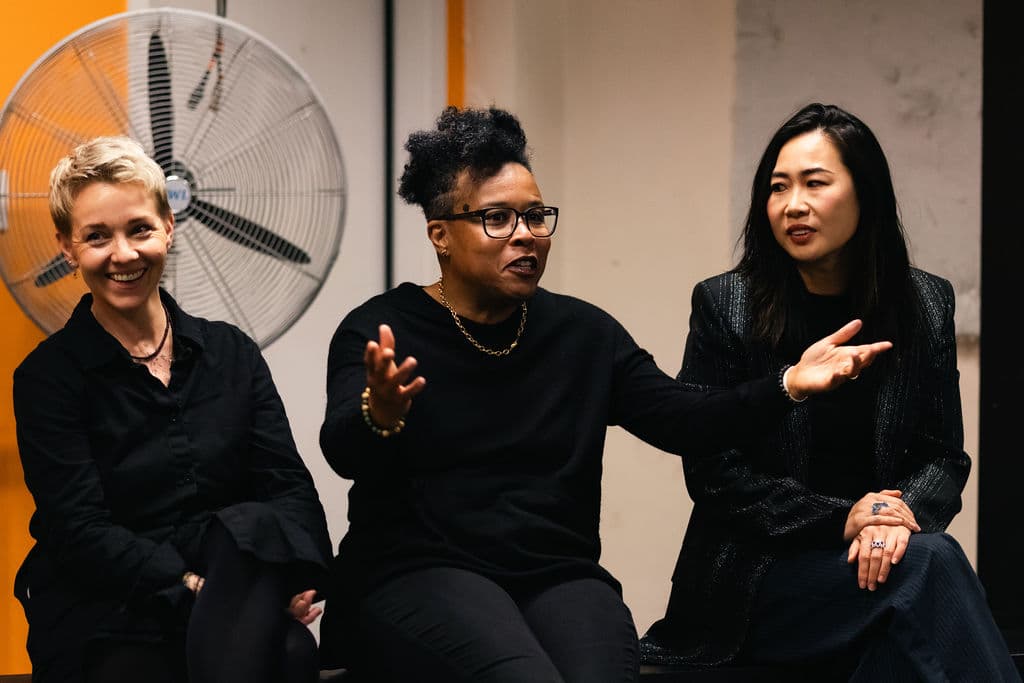
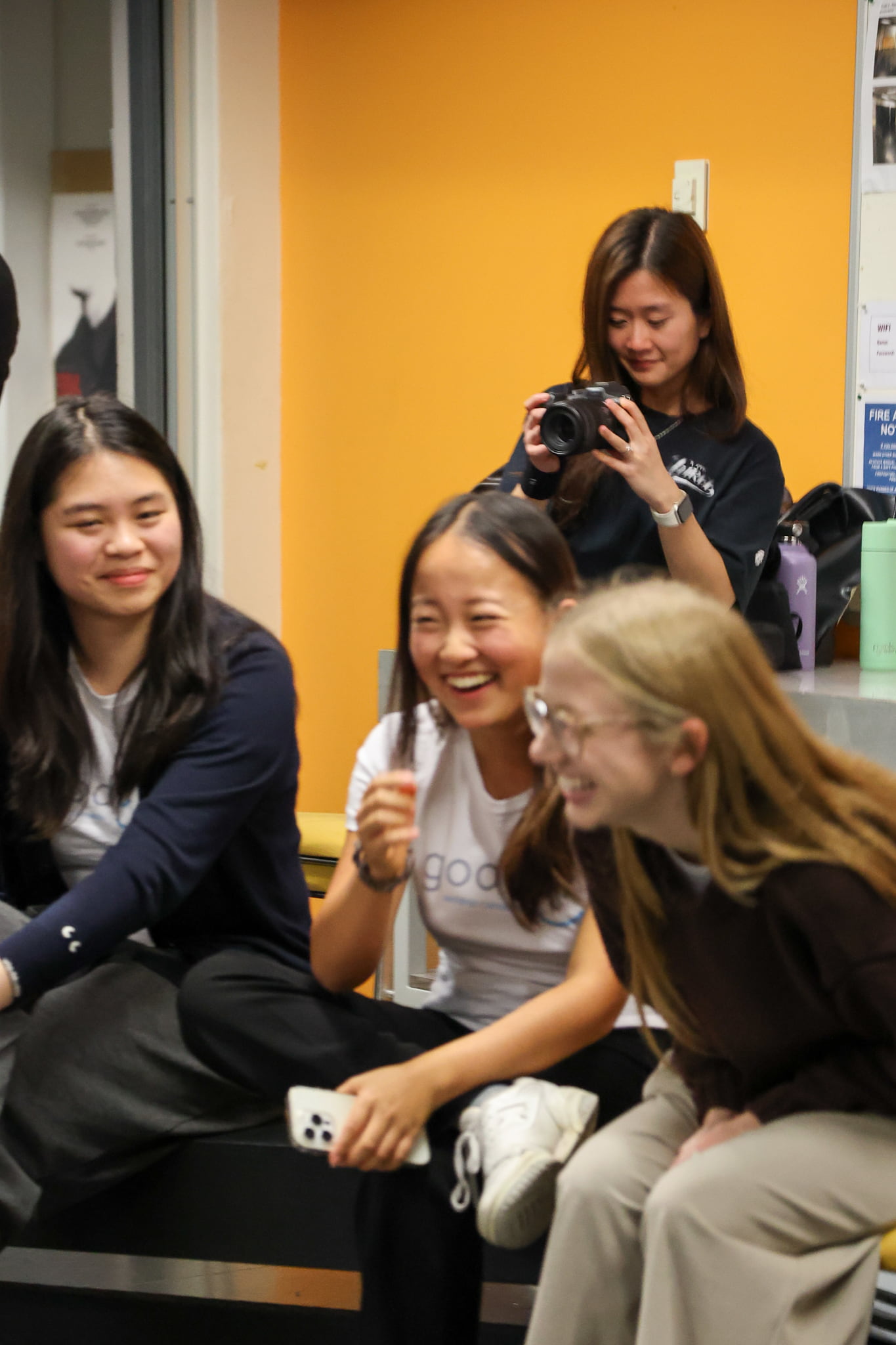
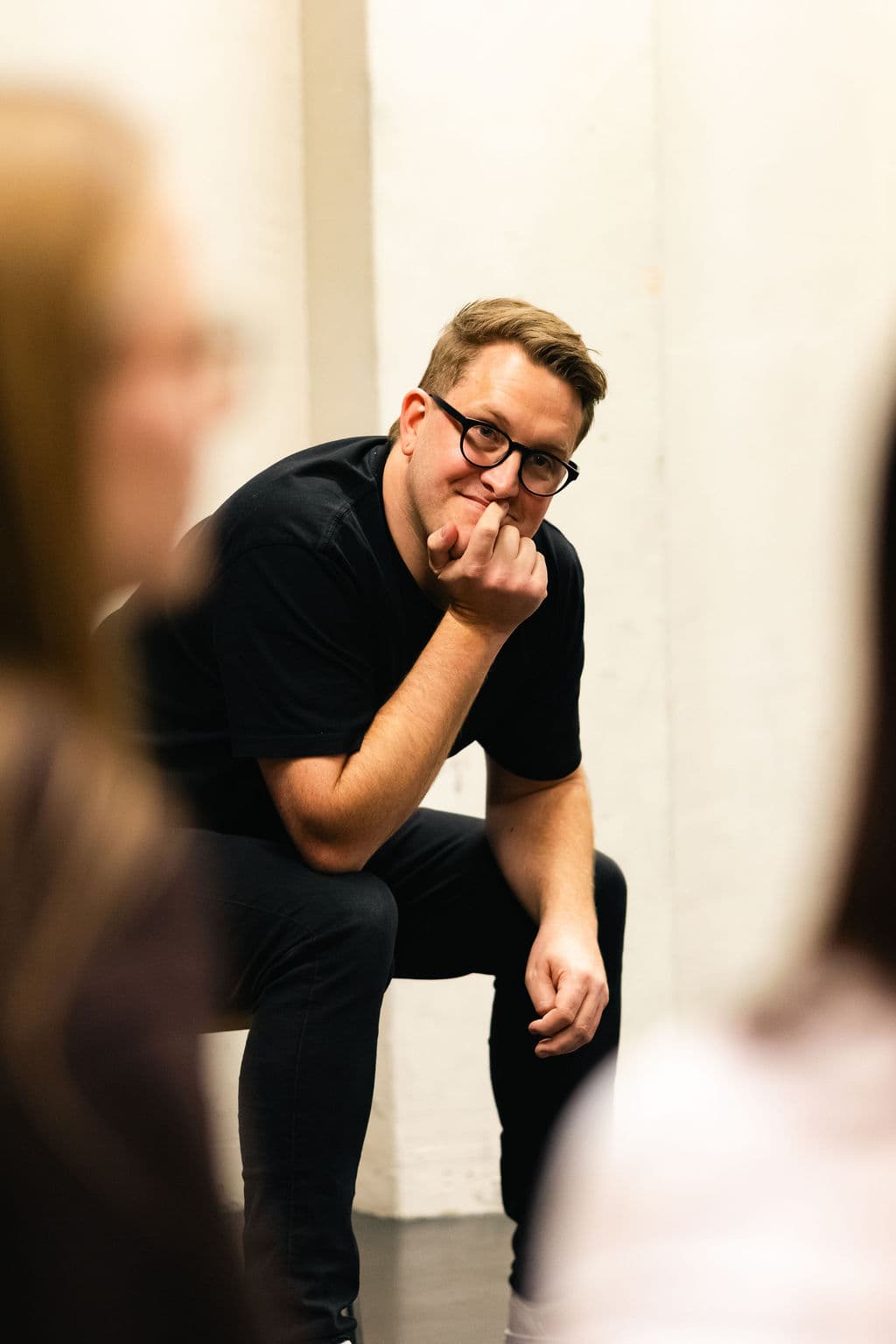
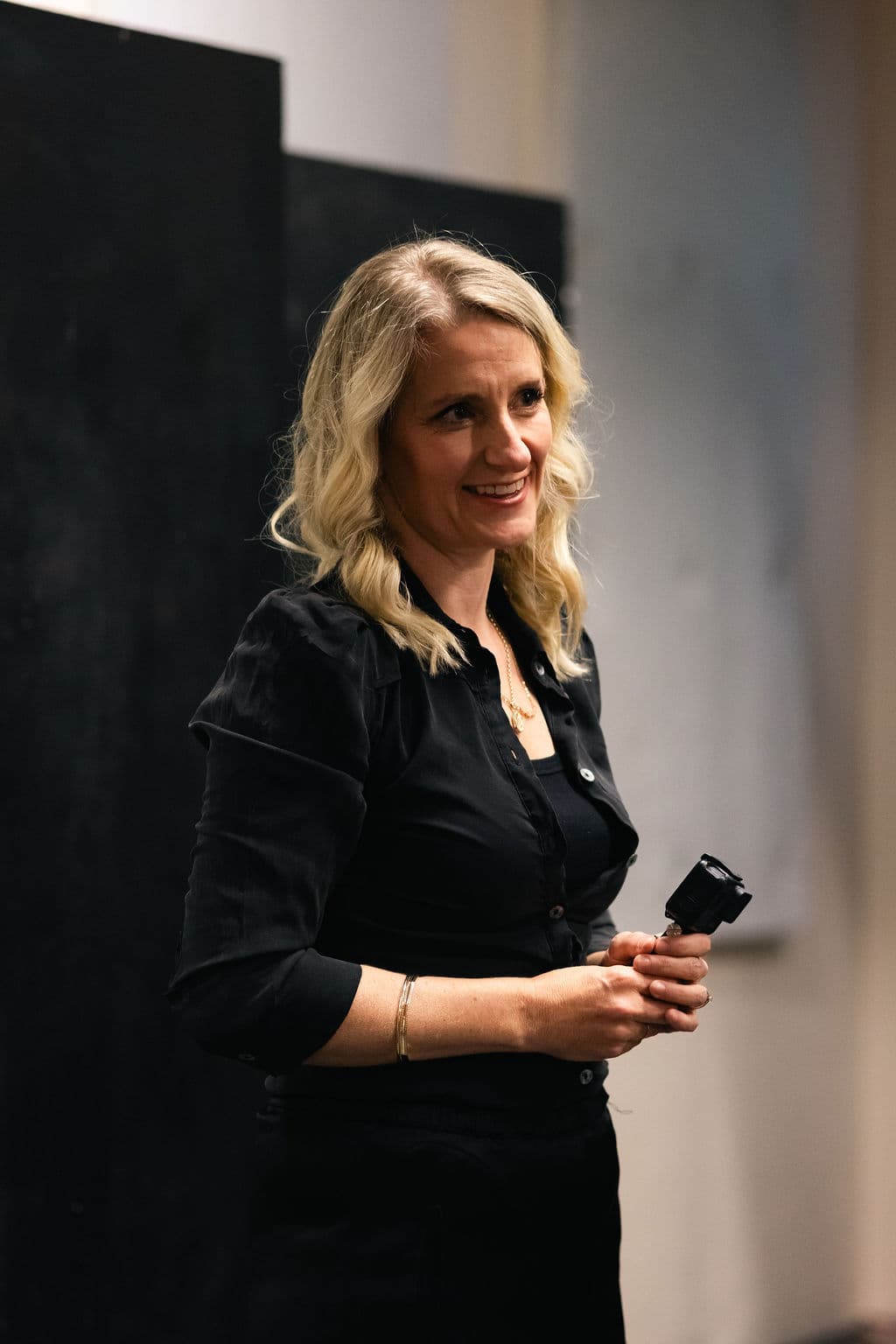
In September 2025 we put both conversations on stage at the same time, at Auckland Theatre Company, and let them speak to each other out loud.

The night was a peer-to-peer learning lab built around a fairly specific problem. Nine out of ten New Zealand businesses are SMEs. Many of those SMEs are quietly avoiding hiring graduates and students, even when the work is there. And many graduates are quietly avoiding pitching to SMEs, even when their skills fit.
Two cohorts who need each other are circling, not talking. So we put fifteen of them in a theatre with mentors, a finance expert, an Iyengar yoga teacher, and a structure most of them had never seen before.
Theory of mind, mindsight, and the hijack in the room
I opened the evening with a question I have been carrying for a while.
“What if you could listen in on the private thoughts behind a polite smile? What if, for a few minutes, you could stand inside the bigger scheme of another person’s life — the pressures, hopes, and risks that never get said out loud?”
— Liz Pinfold-Reed, opening remarks
Tonight, we said, we were going to practise exactly that. The two skills we needed both have names.
Theory of mind is the everyday human ability to form careful guesses about what someone else believes, wants, fears, or plans. Importantly, it is not telepathy. Rather, it is hypothesis-making.
Mindsight is Daniel Siegel’s term for the upgraded version. He coined it in Parenting from the Inside Out.
In short, mindsight is an inner mirror that lets you see your own state, alongside a tuning fork that picks up theirs. Theory of mind makes the guess. Mindsight makes it felt.
“Speak in hypotheses, not headlines.”
— Liz Pinfold-Reed
What stress does to both skills
However, under pressure, we use neither well. When we are stressed, our visual field narrows, our breath gets shallow, and our attention collapses onto our own needs. The person across the table becomes a screen on which we project our own story.
Theory of mind goes offline. As a result, mindsight goes with it. The polite smile is still there. The room has shrunk.
Additionally, for a generation who did their final years of school and university on laptops in bedrooms, sat exams from kitchen tables, and missed the everyday cues you pick up over a beer at the pub, the gap is wider than usual.
For a generation of small business owners who have spent four years navigating lockdowns, supply shocks, and a slow Auckland recovery, the gap is also wider than usual.
Therefore, both sides have a thinner read on each other than any cohort in living memory. Both are right to feel cautious. Naturally, cautious does not negotiate well.
The body settles first. The strategy comes second.
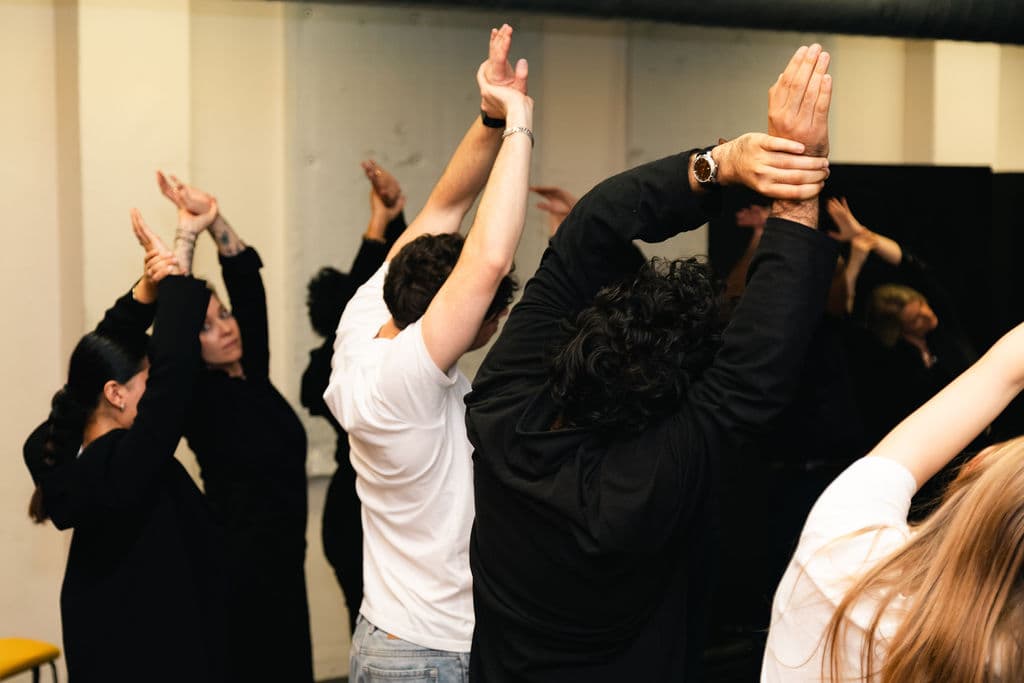
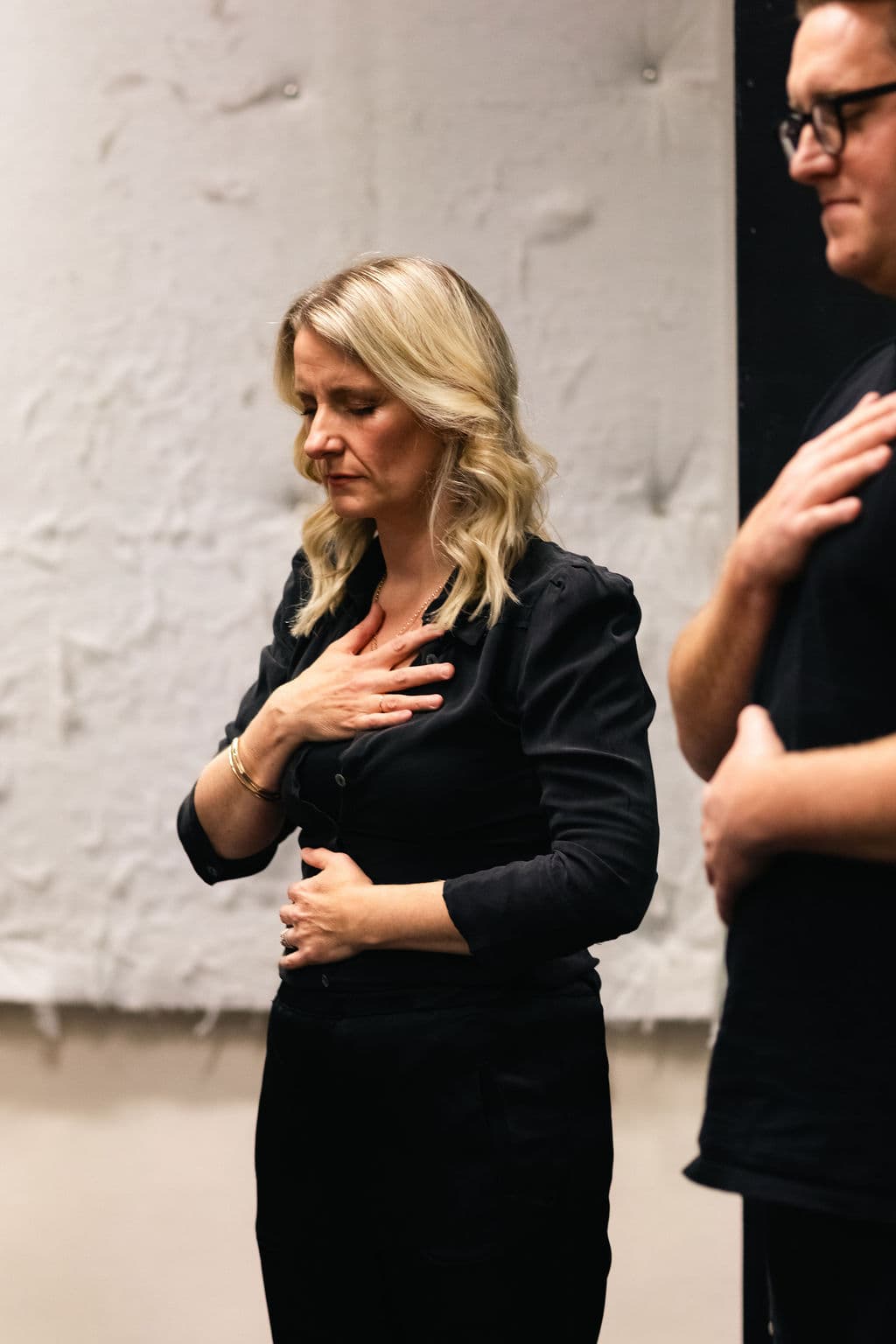
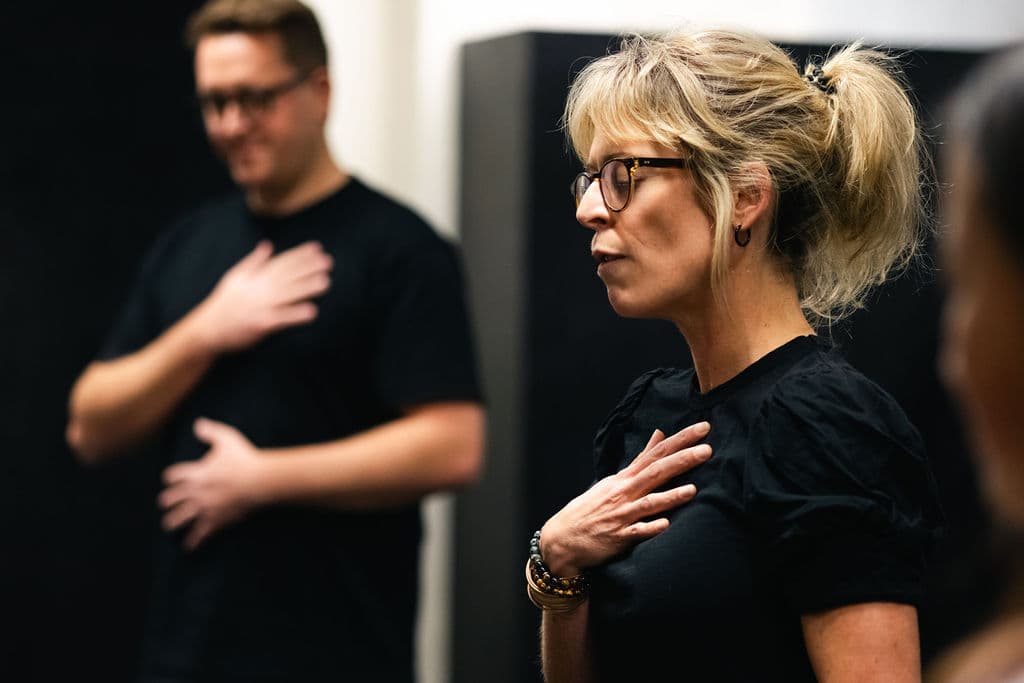
The structure was deliberately physical before it was cognitive. Ange Black opened with ten minutes of standing breath work, shoulder releases, soft-eyes panorama, and grounding through the feet.
We are usually quite happy to call this what it is: nervous system regulation. The body settles, and so does the room. Polyvagal theorists would describe what happens as a shift from sympathetic vigilance into ventral vagal social engagement, which is a long way of saying the eyes get warmer and the jaw lets go.
“When your eyes soften, your awareness widens.”
— Ange Black
More on the polyvagal and movement layer of this work in our companion piece on unlocking innovation through movement.
Then we went to the theatre piece. Each scenario had two roles, an employer and a graduate, and each role had two voices, conscious and subconscious. The conscious voice spoke the line. The subconscious voice spoke the unspoken.
The trick, and the bit that took practice, is that the conscious voice had to respond to what their subconscious had just said, on the spot, with their face. Real-time co-regulation, performed.
The first cast in our sample scene was Joylynn Qui voicing the café owner subconscious while a student voiced her own. Joylynn went first.
“Will I be locked into a contract?”
Then the student watched it land. Her face did the small calculation a face does when it has just heard something it had not let itself think about a stranger. She answered, conscious to conscious, slower than she would have done five minutes earlier, and a different conversation began.
Two private monologues at the same volume
Mechanically, the structure does one thing. It takes two private monologues that would never have met. Then it puts them on the same stage at the same volume.
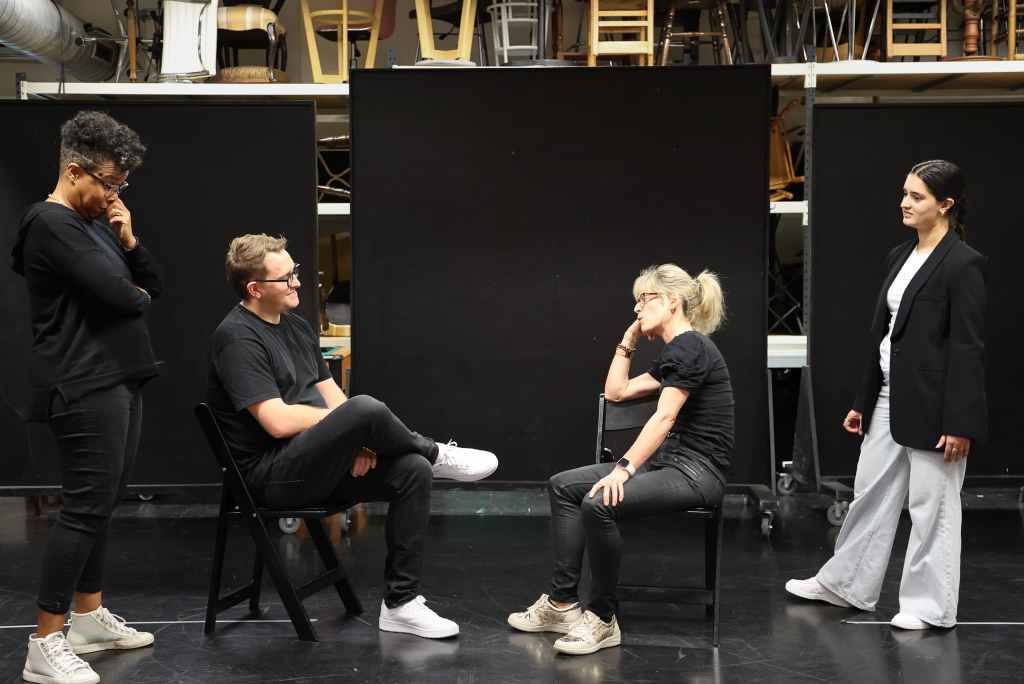
Suddenly you cannot pretend the employer is just being slow about paying you. You can hear him doing the maths on ACC, payroll, software licences, supervision, and the energy his team will need to spend supporting you.
Meanwhile, the graduate is no longer just being entitled about money. You can hear her doing the maths on rent, on the six months she spent on a portfolio that sold for minimum wage, on whether she will be found out before she has had a chance to learn out loud.
The laughter was the surprise
There was a great deal of it. Gen Z were able to playfully tease Gen X and the Millennials. “She probably doesn’t know what TikTok is.”
Gen X subconscious got equal permission to throw back. “They probably won’t show up for work on Saturday.” “What’s wrong with Facebook?”
The form gave both cohorts a way to say the unsaid in the third person. Stripped of confrontation, the honest stuff surfaced. Including the honest stuff about money.
“I worked on this picture for six months. I just sold myself on minimum wage.”
“I don’t run payroll. How do I know I will be able to pay this person? How do I know they will actually do the work?”
Importantly, these are the questions nobody normally asks out loud. Once they were out loud, the room could answer them.
Where the tyres hit the ground
The room was now in a state that could actually receive practical content. Estelle Chout from Chout Accounting walked through what most creatives find genuinely terrifying.

First, how to set yourself up as a sole trader in New Zealand. Second, how Hnry handles the admin so a graduate does not have to learn payroll on the fly.
Then, how to track income and expenses without a spreadsheet you will never open. Finally, how to phrase the pitch to an SME so it sounds like a low-risk solution rather than a complicated one: I handle my own invoicing, you only pay for what I deliver.
Importantly, Estelle’s central insight is one we keep coming back to in this work.
“Creative freelancers often feel their brains get hijacked when they think about finances.”
— Estelle Chout, Chout Accounting
In other words, the hijack is not a personality flaw. It is a physiological event. Specifically, sympathetic activation, narrowed attention, shallow breath, and a feeling close to threat.
It is the exact state mindsight goes offline in. Which is why the work to get the room into ventral vagal regulation has to come first.
Hnry, GST, sole trader registration: these are operational answers to a question the room can only hear once it is safe enough to hold the question.
The fifteen minutes Estelle had on her feet would have hit a defensive, projecting, distracted room before the warm-up. After it, they landed.
From egocentric to allocentric: the moment the circles moved
This was the bigger shift we had been hoping for. Egocentrism is the self-centred default. How does this affect me? It is normal under pressure.
Allocentricism widens the frame. What might be true for them that I cannot yet see? It is the inclusion of the other in your mental picture without erasure of yourself.
Crucially, the aim of the night was to practise moving those two circles closer. Not to make them one. Just to overlap them enough that each cohort could feel the other’s reality.
After Estelle sat down, the conversation kept going. Small business owners talked about being burnt by employees who did not show up, about trust that had been eroded over years rather than days.
Students talked about isolation and the strange tentative quality of being a young adult who learned to read rooms through a screen. The conversation widened past the workplace into something bigger.
What recovery actually looks like
Consequently, we are looking at a generation who did their formative years in forced immobilisation. Polyvagal theory has a clinical word for the state that long stretches of unescapable threat tend to leave behind. Dorsal vagal collapse.
The body, unable to fight or flee, conserves itself by shutting down. The clinical psychologist Arielle Schwartz is precise about what recovery looks like.
Her book Applied Polyvagal Theory in Yoga sits in the same Norton on Interpersonal Neurobiology series as Siegel’s work on mindsight.
Notably, the way out of chronic immobilisation does not run through insight or pep talk. Instead, it runs through embodied, relational, co-regulated experience, repeated in safe-enough doses, over enough time.
Community as medicine
This is where Dr Niki Elliott, of the Mindful Leaders Project at the University of San Diego, frames it most cleanly. Community, she says, is medicine. Not metaphorically. Physiologically.
The same ventral vagal system that lights up in a regulated room is what gets repaired across enough regulated rooms over enough time. The night was a small dose. Cumulative dosing is what changes a generation.
In the end, the proof of the night was not the agenda. Instead, it was the half hour afterwards. People swapping numbers in the car park. Indeed, coffee meetings being scheduled.
SMEs who had walked in cautious about graduates leaving with the names of two students they wanted to try. Students who had walked in nervous about asking for money leaving with Estelle’s invoicing template in their phones.
As a result, a room had moved closer. The circles had moved.
Three things any team can take from this
First, the body has to settle before the strategy can. Ten minutes of grounding is not the warm-up. It is the multiplier on every minute that follows.
Second, the two-voice structure says what direct conversation cannot. The third person does more emotional work than it looks like it is doing. Stripped of confrontation, the honest stuff surfaces.
Third, mixing generations is the whole point. Same-generation rooms reinforce each cohort’s blind spots. Cross-generational rooms surface them. The teasing is the sign the format is working.
The people who made this work
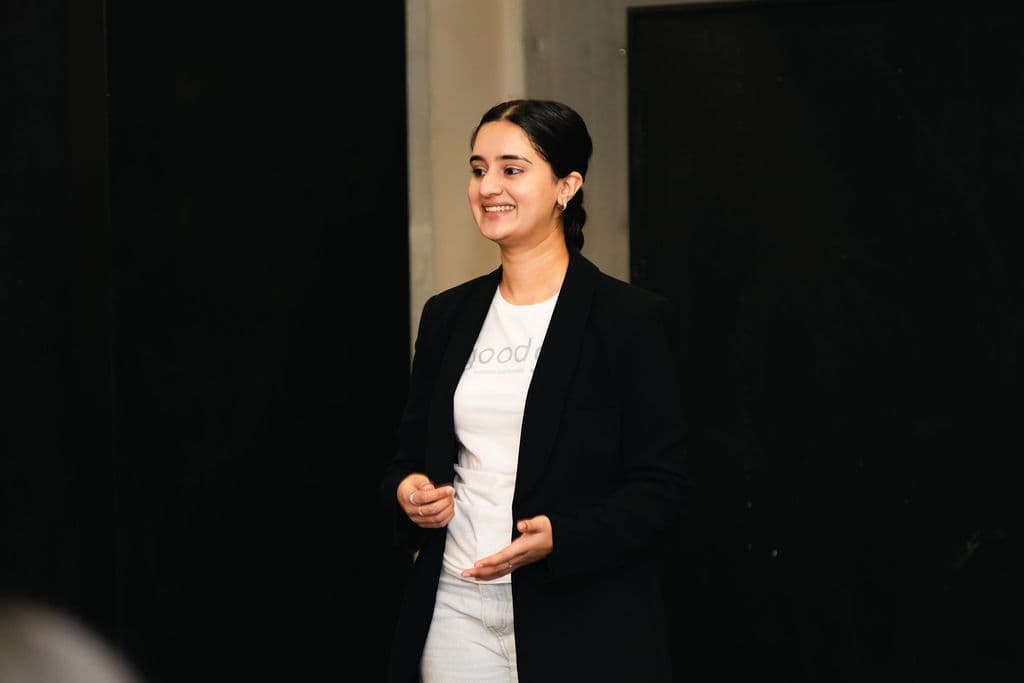
Estelle Chout led the financial literacy section and ran her usual diagnostic on what creatives need to know first about money. Ange Black opened with the breath work and the soft-eyes panorama.
Sam Collins of Audio Advisory, Monica Chen, Joylynn Qui of Hidden Joy Studios, and Pasan Thilakasiri carried the mentor roles and the employer subconscious. Pasan has also written about the AI conversations that came out of the evening.
Anthony Prajogo, Emma Ma, Chloe Hobbs, Jiya Datta, Christine Chang, Sahil Lal, Lucia Lee, and Fiona Wang held the student side.
Aliza Biviji organised the event and the venue with quiet competence. She is a theatre student herself, which it turned out the format thanked us for. Ollie Holdsworth carried the camera and gave us footage we are still grateful for.
Auckland Theatre Company made the room available to us. Some rooms are designed to hold the kind of conversation we wanted. Theirs is one of them.
If your team could benefit from surfacing some truths
If your team could benefit from surfacing some truths that do not quite get said in the meeting, our Innovation Labs are designed to make exactly that possible.
Different venue, different problem to solve, same architecture. Once the body settles, the room opens. Two private monologues become one shared answer. And the answer, more often than not, turns out to have been in the room the whole time.
In short, we just gave it somewhere to land.