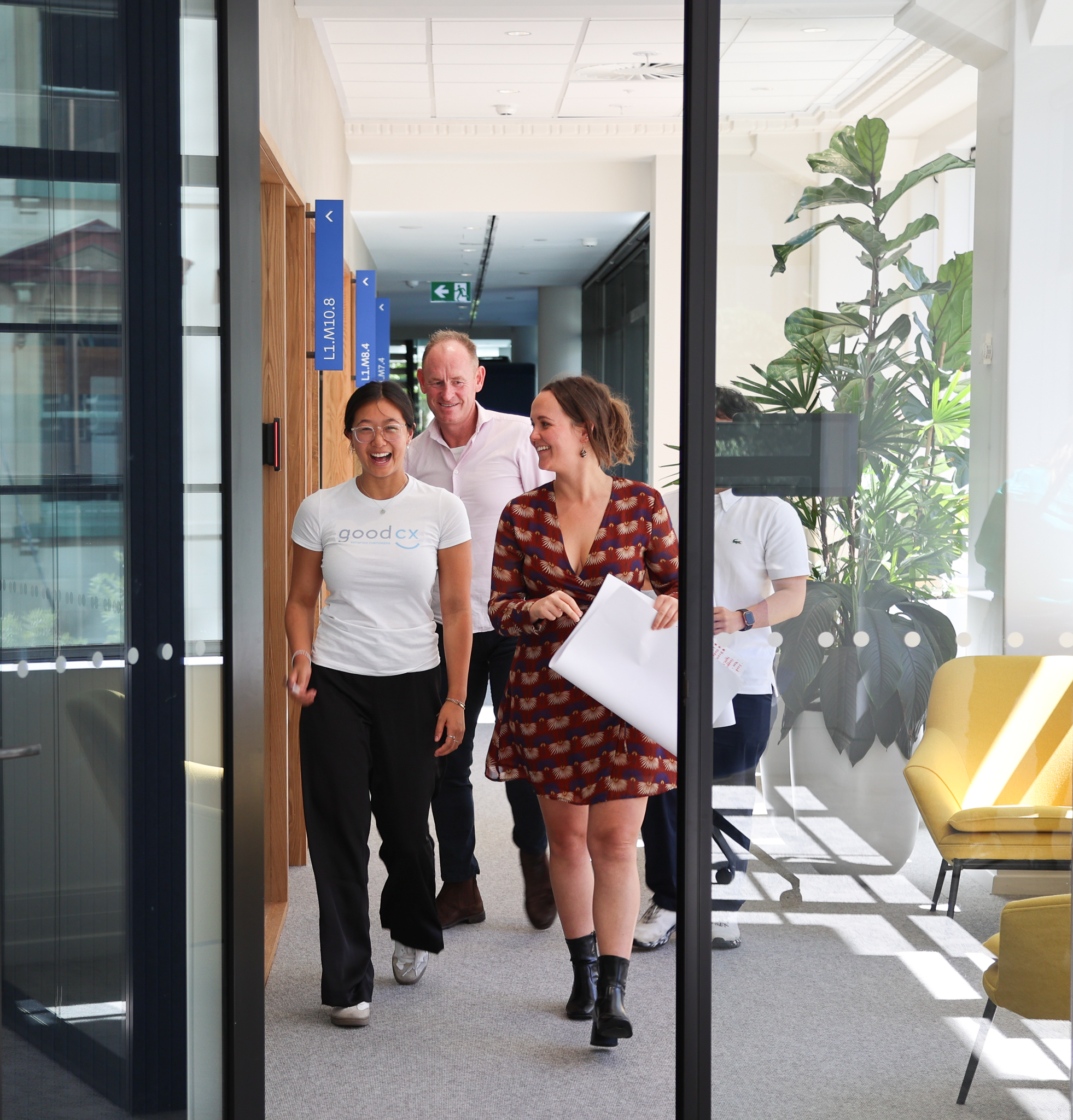
Choose from our purposefully designed OPEN Method© workshop team activities. During the Innovation Lab, your team will experience a broadened perspective and better connection. As a result, your team will be more able to identify business blind spots.
Innovation Labs
Creative problem-solving comes from fluid thinking.
Get your team into flow with an Innovation Lab. Generate quality, lateral solutions that drive business success.
Learn how a safe learning environment fosters connection and belonging
Stimulating Creative Flow and Collaboration
Designed to foster fresh thinking, our Innovation Lab workshops develop team Contributor & Challenger Safety required for innovation buy-in.
- Our OPEN Method builds on the 4 Stages of Psychological Safety & Polyvagal Activities to shift your team into collaborative ideation mode.
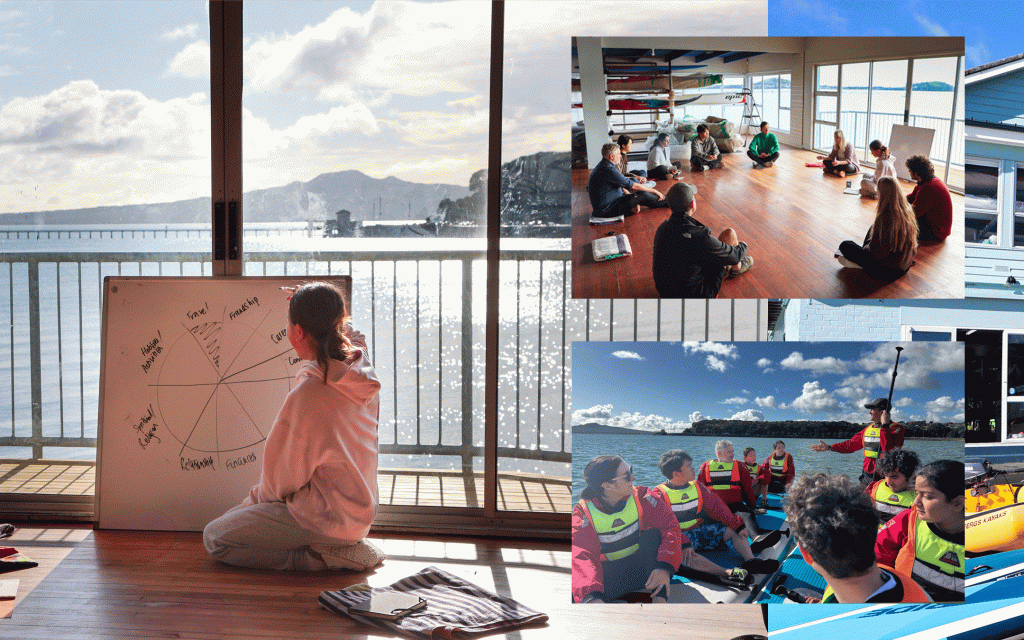
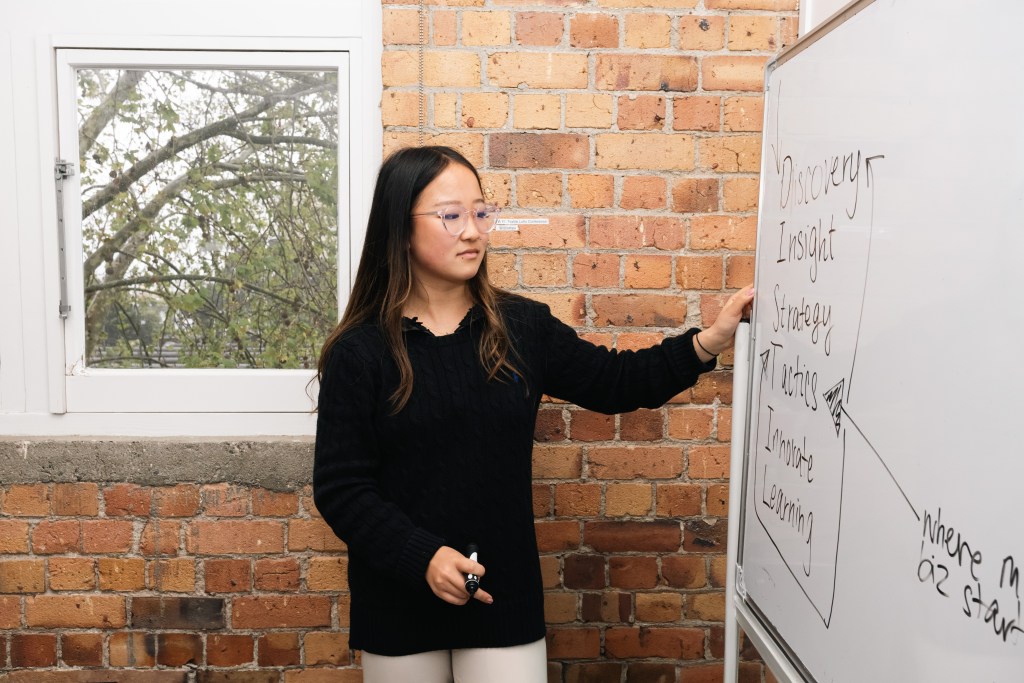
- First, you’ll clarify your objective. Then, step away to participate in movement activities to stimulate the Flow state. As a result, the workshop outputs that follow are freer, more inventive & creative.
- Insight: When we actively shift our nervous system into a place of safety, teams can connect, engage and ideate more creatively.
”The best moments in our lives are not the passive, receptive, relaxing times . . . The best moments usually occur if a person’s body or mind is stretched to its limits in a voluntary effort to accomplish something difficult and worthwhile.
Mihaly CsikszentmihalyiFather of Flow Theory
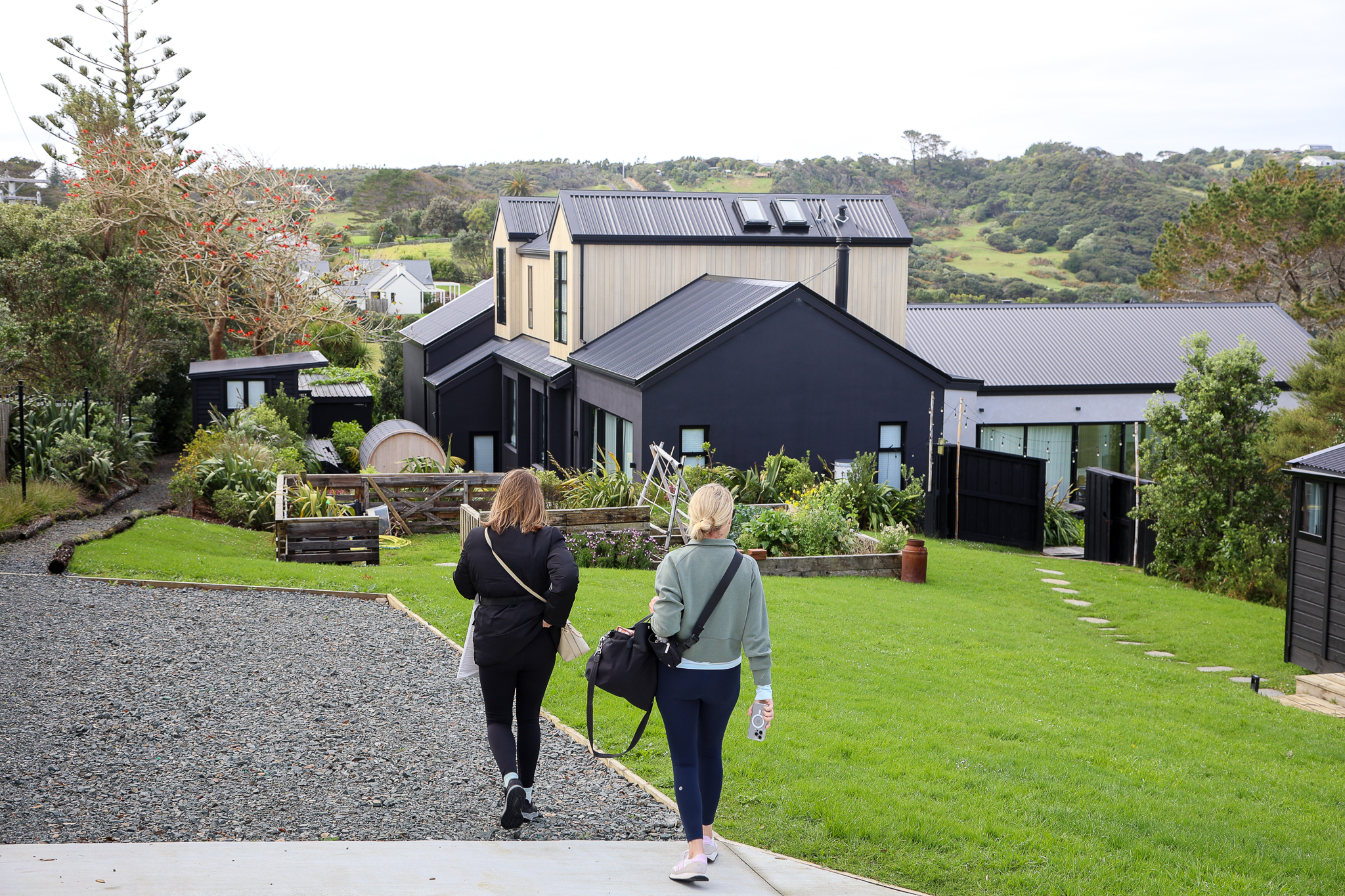
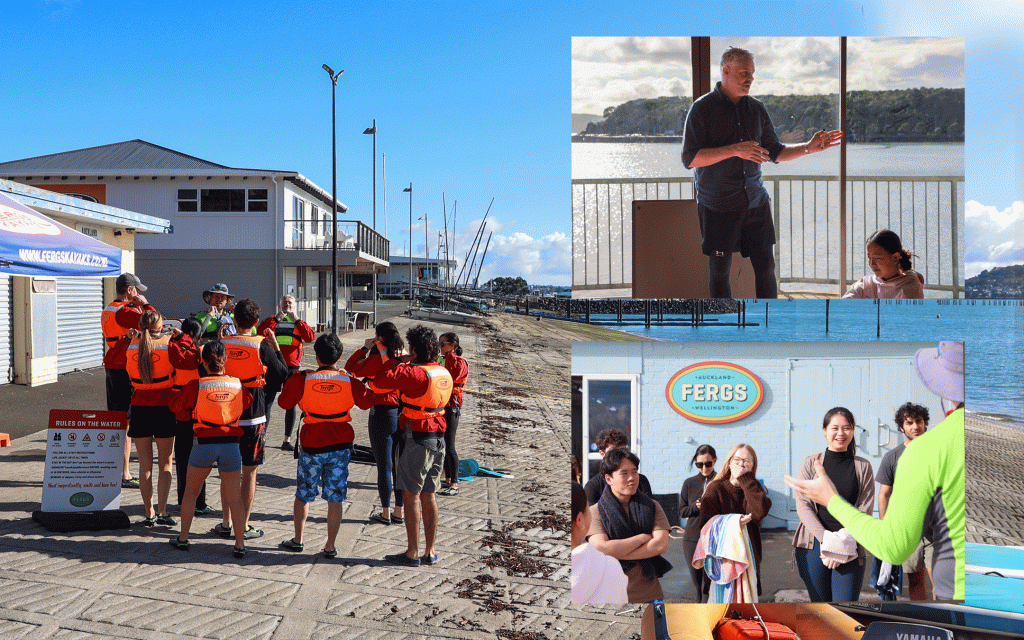
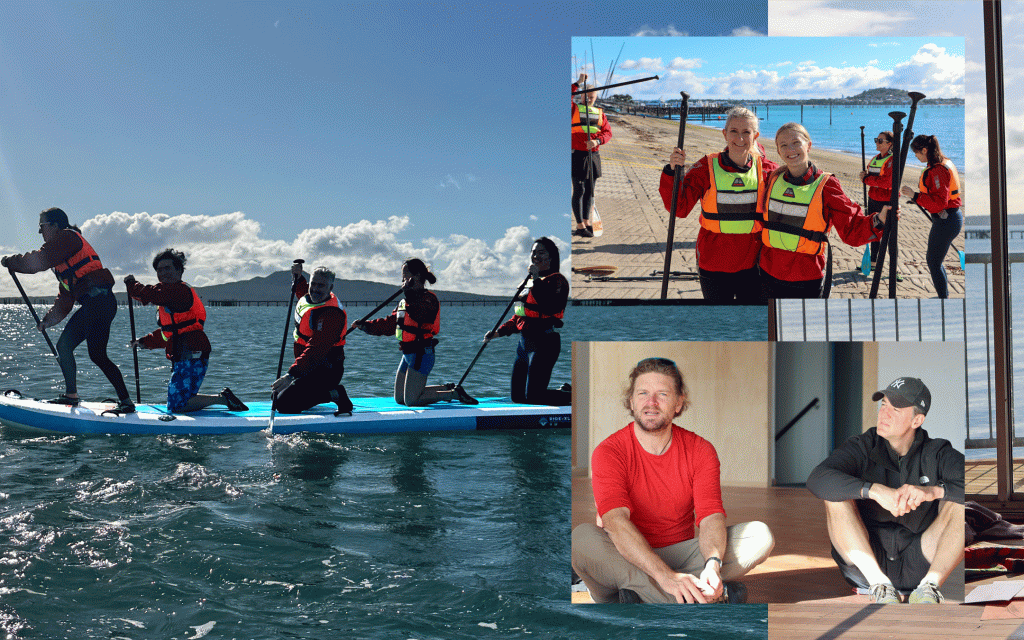
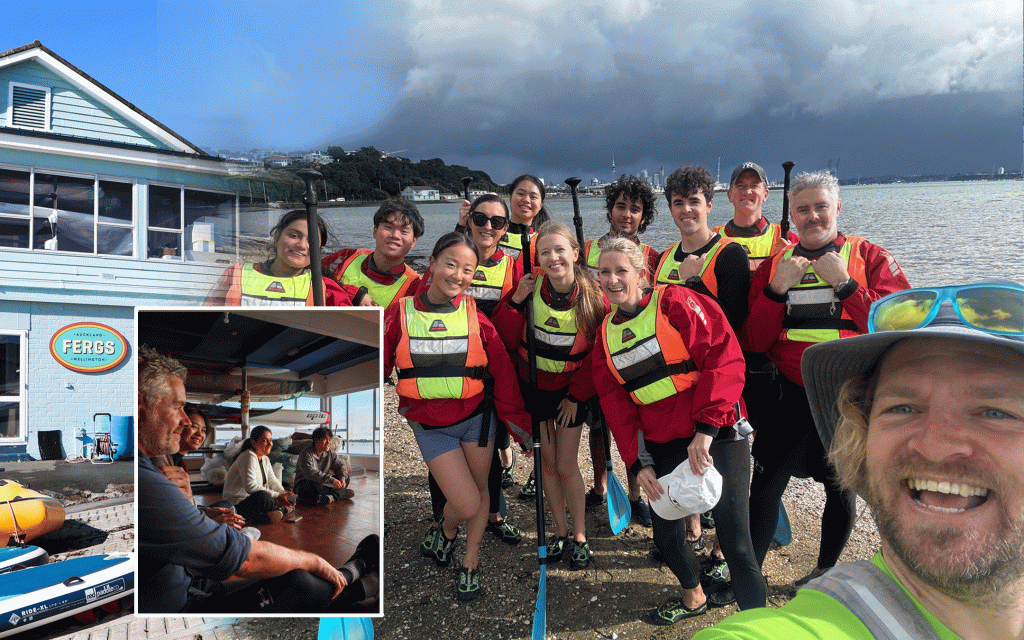
Book a Waka Leadership Team Days in partnership with Fergs Kayaks






















Innovation Lab FAQs
What Is the OPEN Method© Used in These Labs?
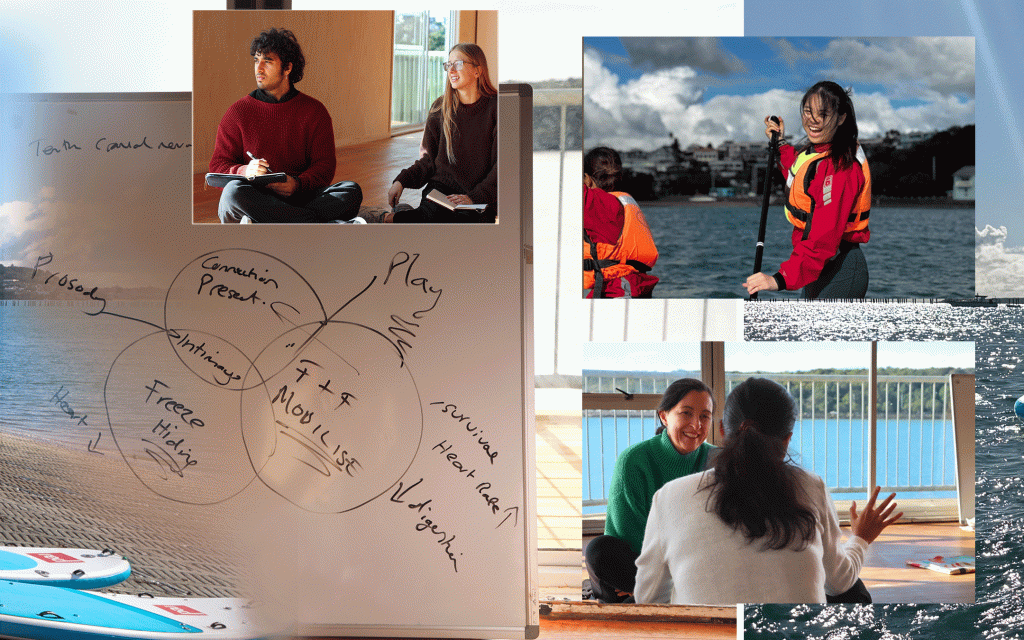
Our OPEN Method© is a structured approach within our workshops and labs. We’ve combined the 4 Stages of Psychological Safety with Polyvagal-inspired activities (inspired by Stanley Rosenberg) to help teams achieve a Flow State. Specifically, utilizing purposeful movements enhances the body’s physiological readiness for creativity and teamwork.
The OPEN Method© Framework:
- Optics: Opening Ocular Peripheral Vision. Exercises that expand visual awareness, helping shift focus outward and promoting a sense of relaxation.
- Posture: An open posture promotes messages of confidence through neural pathways. Gentle movements & actions release tension, creating balance and readiness for engagement.
- Engagement: Connection requires co-regulation and the ability to read facial expressions and vocal prosody. Activities that build interpersonal trust and connection, enhance collaboration and social engagement.
- Network Thinking: Techniques aimed at uniting the team’s collective intelligence to explore ideas from a broader perspective.
What is an Innovation Lab (and how is the Good CX workshop framework different)??
What Is This Type of Innovation Lab?
This specialized Innovation Lab integrates the principles of psychological safety and Polyvagal Theory to create an environment where teams can connect, engage, and ideate effectively. It focuses on developing Contributor and Challenger Safety as outlined in Timothy R. Clark’s framework, ensuring all team members can confidently contribute ideas and challenge the status quo without fear. Additionally, it uses Polyvagal Exercises—gentle movement activities designed to positively shift the nervous system into a state of safety and connection, enabling more open and collaborative interactions.
Why Are These Labs Beneficial to Teams?
This type of Innovation Lab empowers teams by addressing both psychological and physiological barriers to creativity. The focus on Contributor and Challenger Safety ensures team members feel valued and courageous enough to share and critique ideas. Meanwhile, Polyvagal-inspired activities help regulate the nervous system, encouraging a state of safety and openness. Ultimately, the combination of these elements broadens perspectives, deepens connection, and enhances team synergy. As a result the outputs are more inventive, collaborative, and effective.
What Is This Type of Innovation Lab?
This specialised Innovation Lab integrates the principles of psychological safety and Polyvagal Theory to create an environment where teams can connect, engage, and ideate effectively. It focuses on developing Contributor and Challenger Safety as outlined in Timothy R. Clark’s framework, ensuring all team members can confidently contribute ideas and challenge the status quo without fear. Additionally, it uses Polyvagal Exercises—gentle movement activities designed to positively shift the nervous system into a state of safety and connection, enabling more open and collaborative interactions.
Why Are These Labs Beneficial to Teams?
This type of Innovation Lab empowers teams by addressing both psychological and physiological barriers to creativity. The focus on Contributor and Challenger Safety ensures team members feel valued and courageous enough to share and critique ideas. Meanwhile, Polyvagal-inspired activities help regulate the nervous system, encouraging a state of safety and openness. Ultimately, the combination of these elements broadens perspectives, deepens connections, and enhances team synergy. As a result the outputs are more inventive, collaborative, and effective.
What is Flow State and how can it support Ideation?
What Is Flow State?
Flow State is a highly focused state where individuals experience immersion and energized engagement in an activity. Think of the Runners High as an example. Research suggests that during Flow, the brain releases neurochemicals like endorphins and dopamine. In turn, these chemicals enhance your sense of reward sensitivity, mood, and task engagement. Experts such as Daniel Liberman show how neurochemical releases help shift the body into the “Here and Now”. This reduces stress and fosters calm, which is essential for creative and innovative thinking.
How Can Flow State Support Ideation in Business?
Interestingly, Flow State supports ideation by enhancing Cognitive Flexibility and unlocking new levels of creativity. That’s because the release of neurochemicals increases your focus. Meanwhile, your parasympathetic (rest and digest) shift enables relaxation and openness. Naturally, these conditions are integral for exploring innovative ideas. And problem-solving! Thus, teams in Flow are more collaborative and inventive. Our labs use these insights to enable teams to generate and refine innovative solutions effectively during a workshop.
What Are Contributor and Challenger Safety, and Why Are They Important for Team Innovation?
What Are Contributor and Challenger Safety?
According to Timothy R. Clark, Contributor Safety is when individuals feel safe to use their knowledge and skills to contribute without fear of rejection or embarrassment. Challenger Safety occurs when team members feel safe to question the status quo, offer new ideas, and take risks without fear of negative consequences.
Why Are They Important for Team Innovation?
Similarly, Contributor Safety allows team members to freely share their expertise. As a result, we can foster greater engagement and entertain diverse perspectives. Meanwhile, Challenger Safety encourages bold thinking, constructive debate, and questioning assumptions. Importantly, you’ll experience heightened group creativity and more breakthrough solutions. Together, these create a culture that supports collaboration, problem-solving, and sustained innovation.
What Are Polyvagal Exercises and Why Are They Beneficial to Teams?
What Are Polyvagal Exercises?
Polyvagal Exercises, rooted in the Polyvagal Theory developed by Dr. Stephen Porges. The practices are designed to regulate the autonomic nervous system by stimulating the vagus nerve. Specifically, these exercises aim to shift individuals out of states of stress or survival responses (fight, flight, or freeze). As a result the shift into states of safety, connection, and social engagement is a great way of also stimulating innovation in workshops. Generally, the practices include breathing techniques, visual exercises, gentle movement. Moreover, vocalization exercises to help calm the nervous system and promote a sense of safety.
Why Are Polyvagal Exercises Beneficial to Teams?
According to Dr. Stephen Porges and Stanley Rosenberg (author of Accessing the Healing Power of the Vagus Nerve), these exercises are beneficial because they help release stress or dysregulation in the nervous system. By enabling individuals to move from a defensive state into a calm, connected, and engaged state, insights are easier to discover.
Therefore, in a team setting, this shift is critical for fostering collaboration, active listening, and trust. Ultimately, when team members feel calm and safe, they are more likely to contribute openly. Moreover, members can resolve conflicts constructively and remain flexible during challenges. By regulating the nervous system, Polyvagal Exercises can enhance the physiological foundation required for effective teamwork, creativity, and sustained engagement.
How much is an Innovation Lab?
We’ll co-design a programme tailored to the needs of your team. Contact us to discuss the overarching business challenge you’d like to focus on and the activities that work for your group.
As a guide, our standard, in-office one-day workshops start from $4000. Activities, location and group size will be factored in.
What Is This Type of Innovation Lab?
This specialized Innovation Lab integrates the principles of psychological safety and Polyvagal Theory to create an environment where teams can connect, engage, and ideate effectively. It focuses on developing Contributor and Challenger Safety as outlined in Timothy R. Clark’s framework, ensuring all team members can confidently contribute ideas and challenge the status quo without fear. Additionally, it uses Polyvagal Exercises—gentle movement activities designed to positively shift the nervous system into a state of safety and connection, enabling more open and collaborative interactions.
Why Are These Labs Beneficial to Teams?
This type of Innovation Lab empowers teams by addressing both psychological and physiological barriers to creativity. The focus on Contributor and Challenger Safety ensures team members feel valued and courageous enough to share and critique ideas. Meanwhile, Polyvagal-inspired activities help regulate the nervous system, encouraging a state of safety and openness. Ultimately, the combination of these elements broadens perspectives, deepens connection, and enhances team synergy. As a result the outputs are more inventive, collaborative, and effective.
Can I attend an Innovation Lab as a solopreneur or collaborative team?
Can I join an Innovation Lab if I’m coming as an individual?
Absolutely! Interestingly, cohorts of business owners who have similar challenges to solve make great teams. Moreover, those who work in collaborative industries can really cross-pollinate ideas.
Ultimately, the focus must be on individuals looking to work on a similar type of business challenge. Have a look at our other courses to get a feel for some of the top questions we are getting right now.
Contact us to Waitlist for the next cohort.